Over 150 years old and still the most interesting thing in the room.
This fish head oyster plate was manufactured by Adams & Bromley of Hanley, Staffordshire — one of the most celebrated English majolica firms of the Victorian era — circa 1870–1880. It is among the most sought-after forms in antique majolica collecting, and for good reason.
Six relief-molded oyster wells are formed as dark, textured fish heads facing inward toward a central turquoise crackle-glazed well — intended originally for cocktail sauce, lemon, or crackers. The sculpted fish scales are rendered with extraordinary precision, glazed in deep slate green with naturalistic detail. A yellow rim frames the entire composition. Turn it over and you'll find the hallmark of authentic 19th-century English majolica — a hand-brushed mottled tortoiseshell glaze covering the reverse, a labor-intensive finishing technique that modern reproductions almost never replicate.
That reverse is your provenance. It is the mark of a maker who believed the piece deserved to be beautiful from every angle.
Adams & Bromley pieces of this caliber and condition are genuinely rare. Crazing is present on the teal center well, light staining and a very small chip to the back of the plate are present. None visible from the front, consistent with age and entirely expected. A true collector's piece.
We recommend this piece for display only. Should you choose to use it, please lead test prior to food contact, as with all antique majolica.
Details
Adams & Bromley, Hanley, Staffordshire, England, majolica, fish head oyster plate, six oyster wells, turquoise crackle center well, mottled tortoiseshell reverse, c.1870–1880, crazing present on teal center well consistent with age, decorative only
Tucked inside every set, a little something for first time Tavola customers — a hand-finished vintage passport notebook. Note the piece, the moment, the person you gave it to. One day these pieces will sit in someone else's hands — and they'll know it came from yours.
Over 150 years old and still the most interesting thing in the room.
This fish head oyster plate was manufactured by Adams & Bromley of Hanley, Staffordshire — one of the most celebrated English majolica firms of the Victorian era — circa 1870–1880. It is among the most sought-after forms in antique majolica collecting, and for good reason.
Six relief-molded oyster wells are formed as dark, textured fish heads facing inward toward a central turquoise crackle-glazed well — intended originally for cocktail sauce, lemon, or crackers. The sculpted fish scales are rendered with extraordinary precision, glazed in deep slate green with naturalistic detail. A yellow rim frames the entire composition. Turn it over and you'll find the hallmark of authentic 19th-century English majolica — a hand-brushed mottled tortoiseshell glaze covering the reverse, a labor-intensive finishing technique that modern reproductions almost never replicate.
That reverse is your provenance. It is the mark of a maker who believed the piece deserved to be beautiful from every angle.
Adams & Bromley pieces of this caliber and condition are genuinely rare. Crazing is present on the teal center well, light staining and a very small chip to the back of the plate are present. None visible from the front, consistent with age and entirely expected. A true collector's piece.
We recommend this piece for display only. Should you choose to use it, please lead test prior to food contact, as with all antique majolica.
Details
Adams & Bromley, Hanley, Staffordshire, England, majolica, fish head oyster plate, six oyster wells, turquoise crackle center well, mottled tortoiseshell reverse, c.1870–1880, crazing present on teal center well consistent with age, decorative only
Tucked inside every set, a little something for first time Tavola customers — a hand-finished vintage passport notebook. Note the piece, the moment, the person you gave it to. One day these pieces will sit in someone else's hands — and they'll know it came from yours.
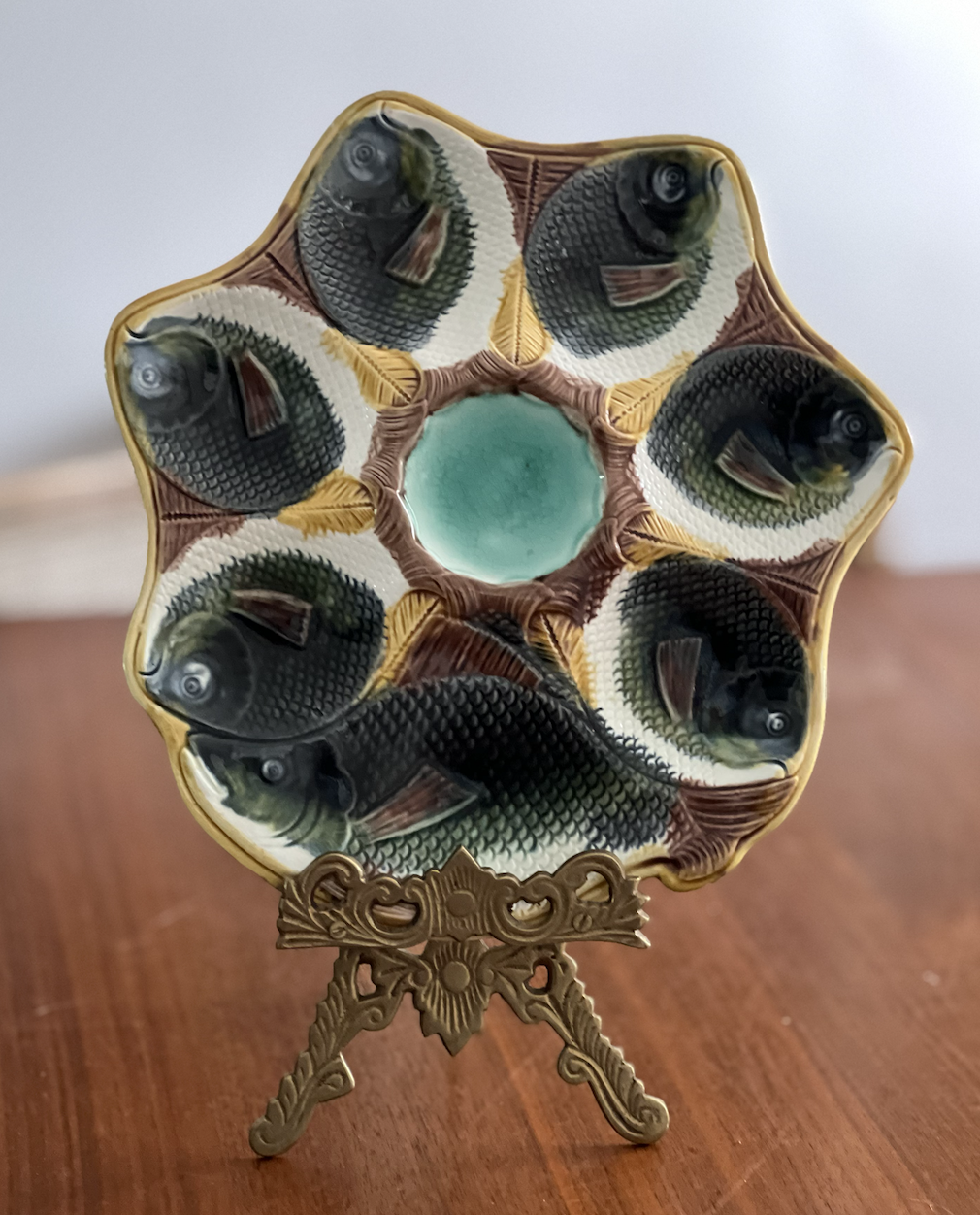 Image 1 of 5
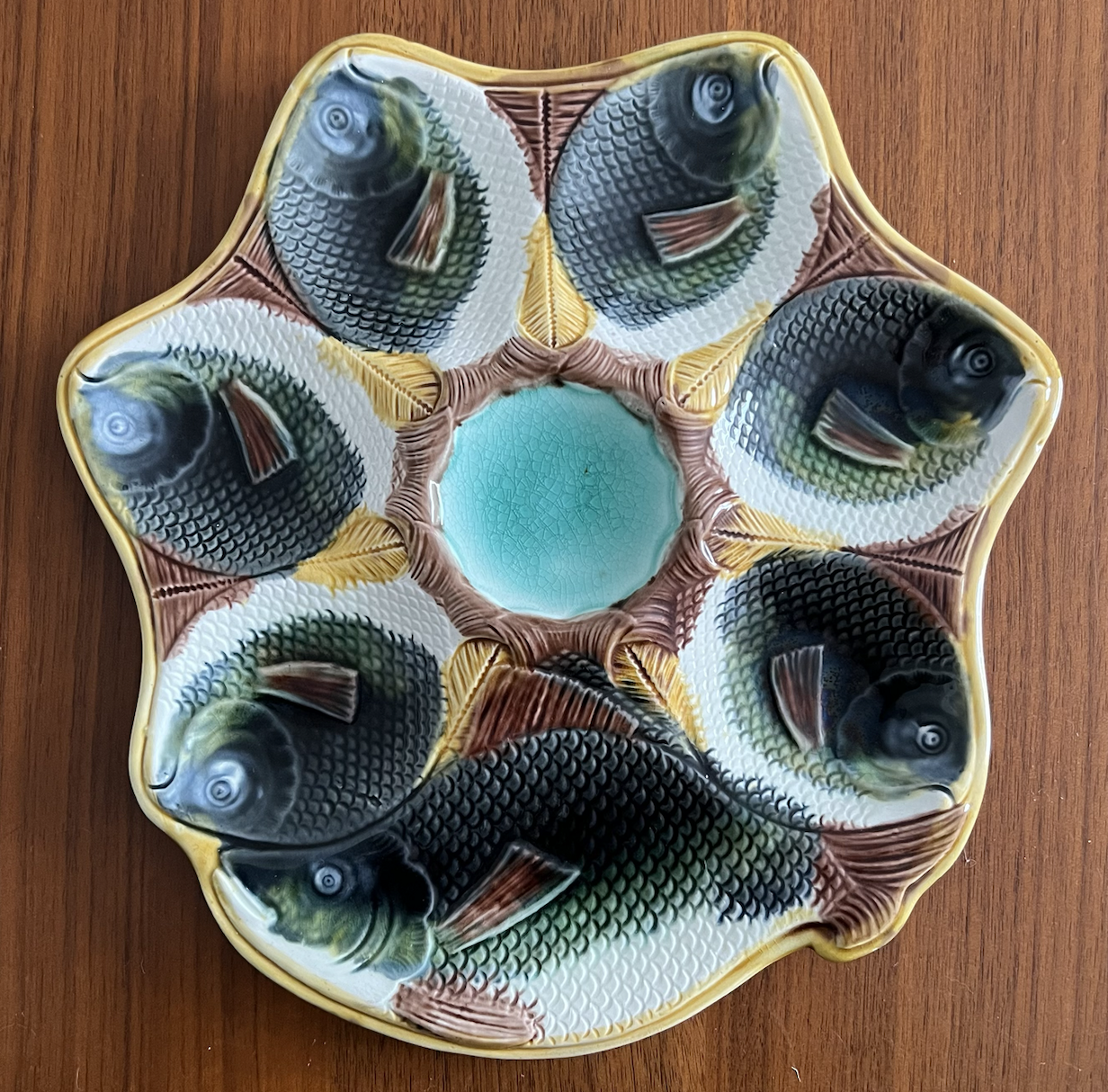 Image 2 of 5
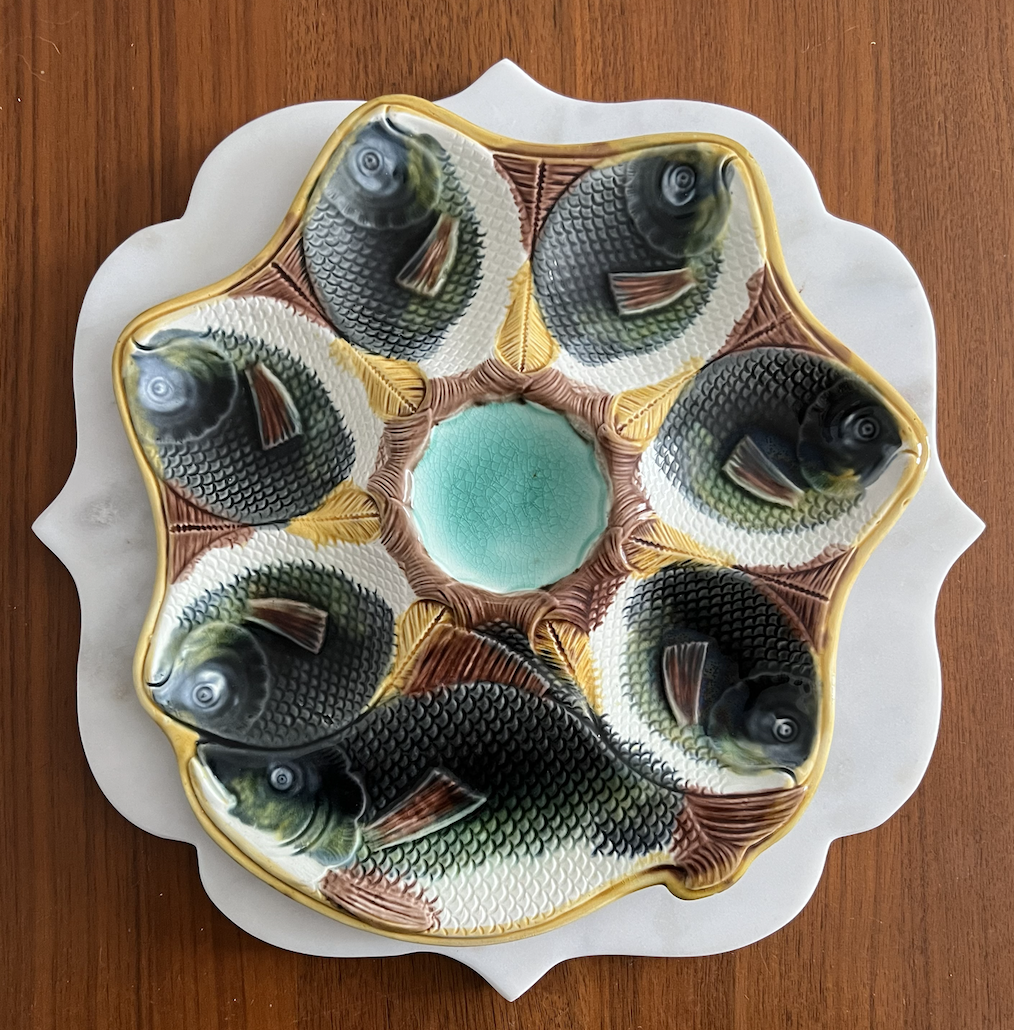 Image 3 of 5
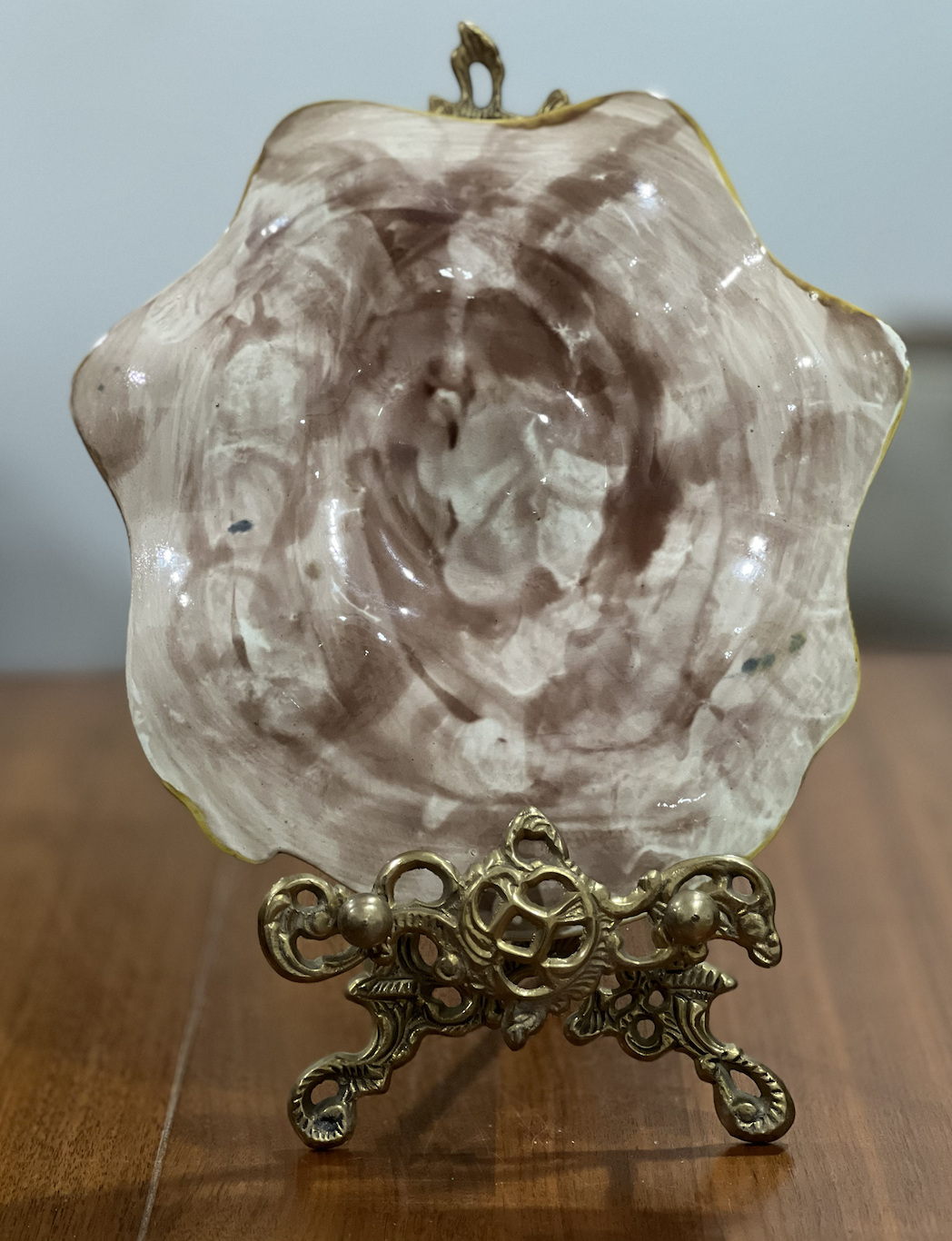 Image 4 of 5
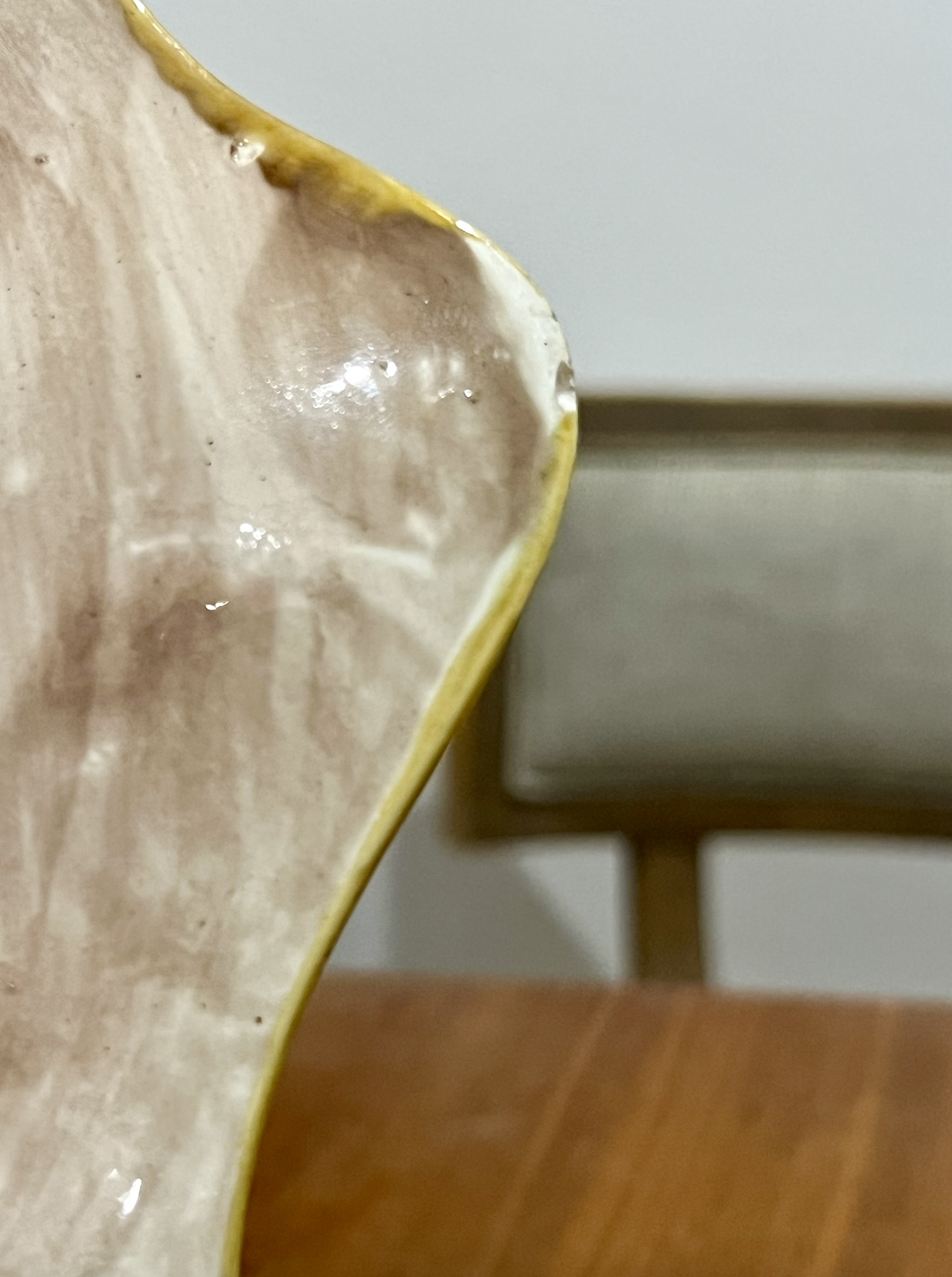 Image 5 of 5