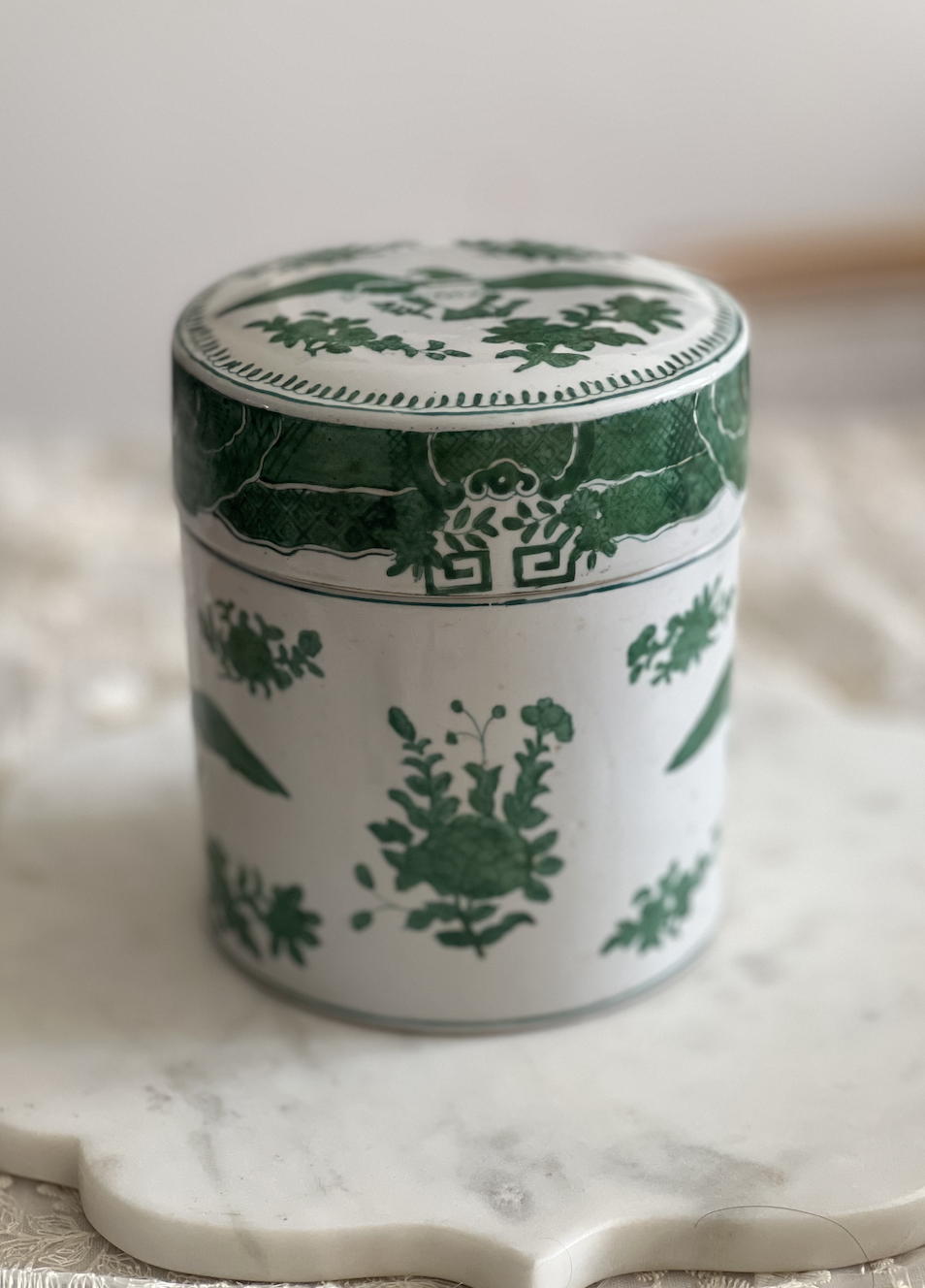
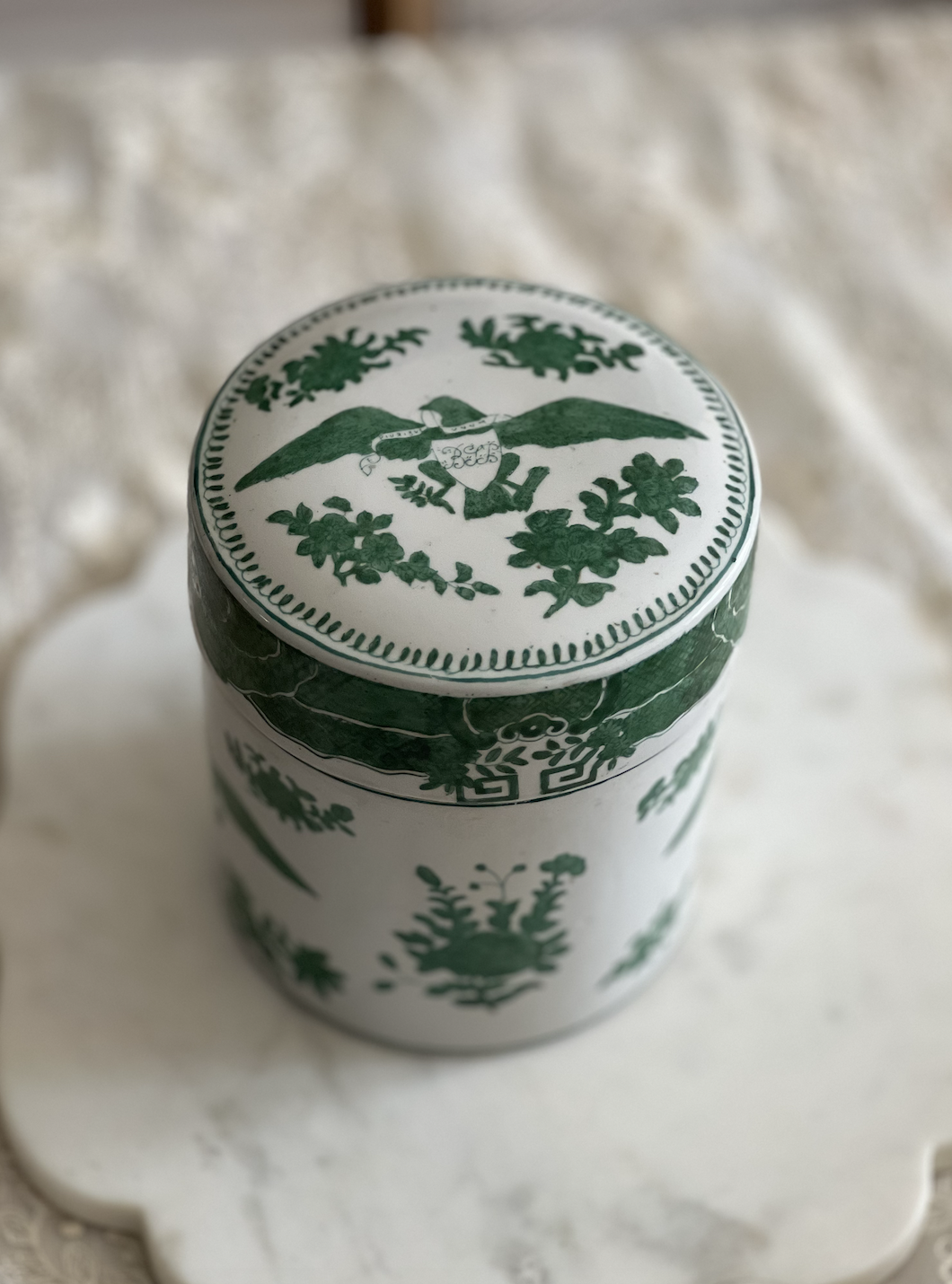
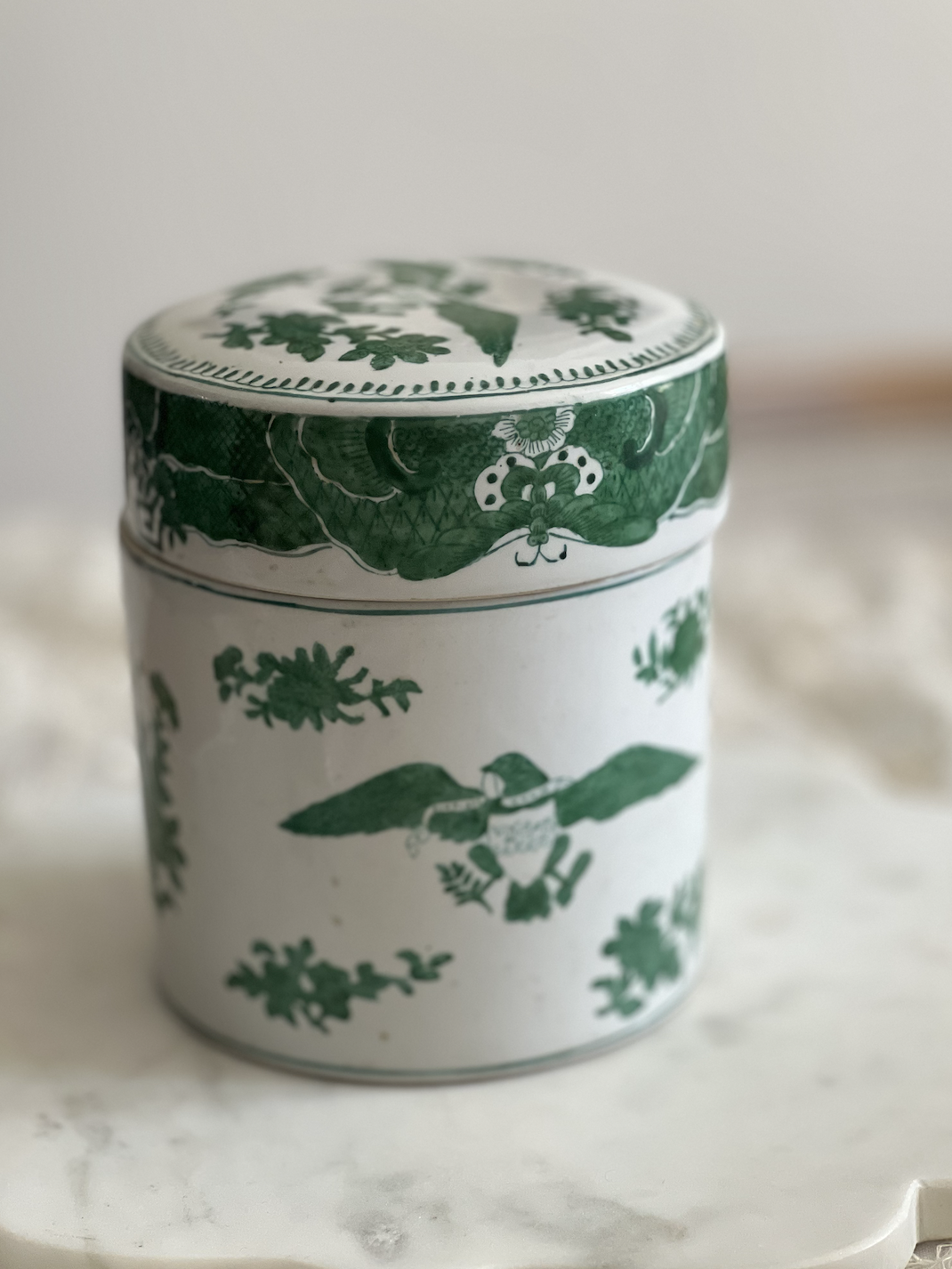
A dreamy, imagined East, rendered in ironstone.
This antique platter carries Davenport's "Cyprus" pattern, a chinoiserie fantasy scene centered on a richly detailed pagoda rising above winding waterways, palm trees, and tropical foliage. It's the kind of romanticized Eastern landscape that captivated Victorian households during a period when European trade with Asia was expanding rapidly, and the fascination with faraway places was as much about imagination as accuracy. The central scene sits inside a wide floral border of overflowing peonies and scrolling foliage, all printed in a rich monochrome transfer that softens into the smoky, slightly blurred look prized in mid-Victorian "flow" transferware.
The platter takes an octagonal form with gently canted corners, a shape as distinctive as the pattern itself. It's marked on the underside with a scroll cartouche reading "Cyprus," with "Davenport" printed directly below.
Davenport Pottery was founded in Longport, Staffordshire in 1794 by John Davenport, and grew into one of the most respected English makers of earthenware, porcelain, and ironstone through the 19th century. This piece dates to roughly 1840-1850, made from durable ironstone (stone china) — a heavier body developed to resist chipping while echoing the look of fine porcelain, which is exactly why large serving pieces like this one have survived so well over the last 180 years.
As with most pieces of this age, there is crazing throughout the glaze along with two mature chips on the front and one on the back — the kind of gentle wear that comes with nearly two centuries of history and use. Rather than taking away from the piece, this only adds to its nostalgia — a quiet record of nearly two centuries spent on someone's table.
Tucked inside every set, a little something for first time Tavola customers — a hand-finished vintage passport notebook. Note the piece, the moment, the person you gave it to. One day these pieces will sit in someone else's hands — and they'll know it came from yours.
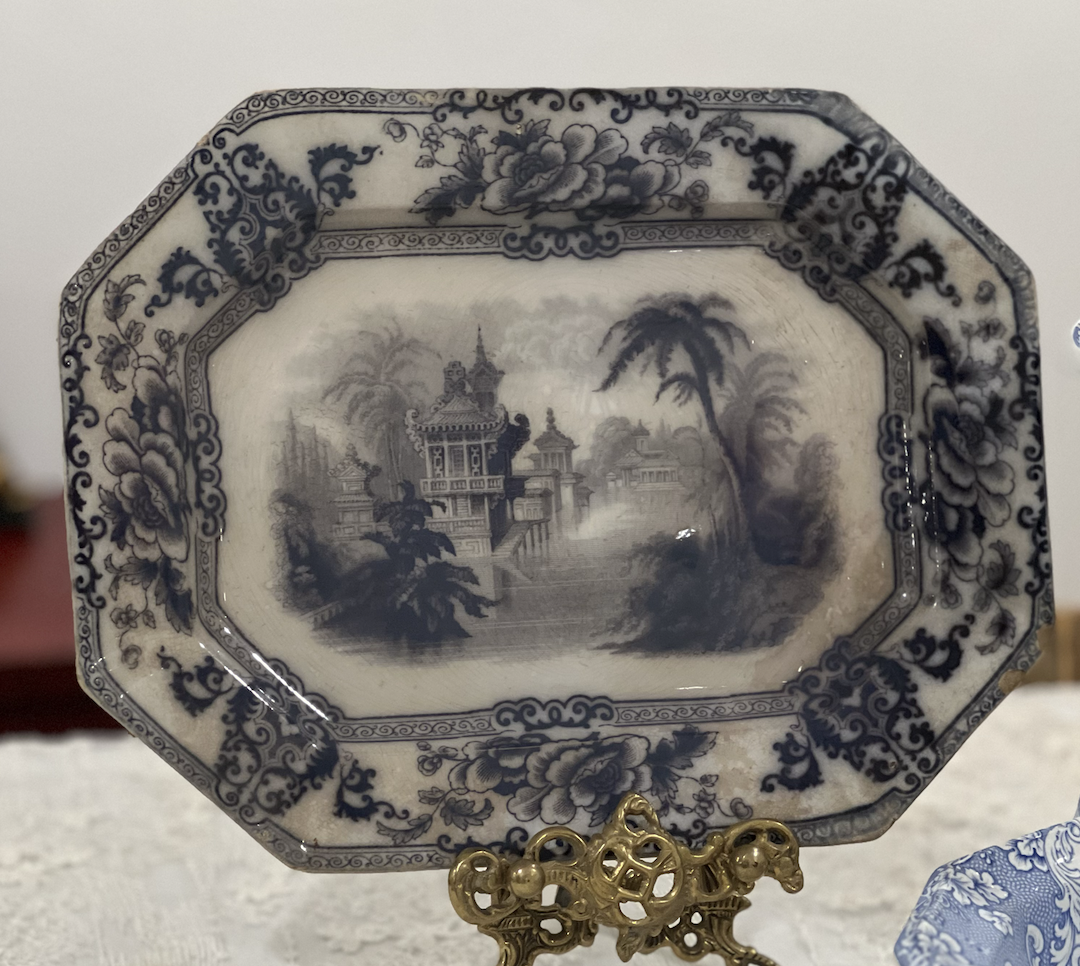 Image 1 of 4
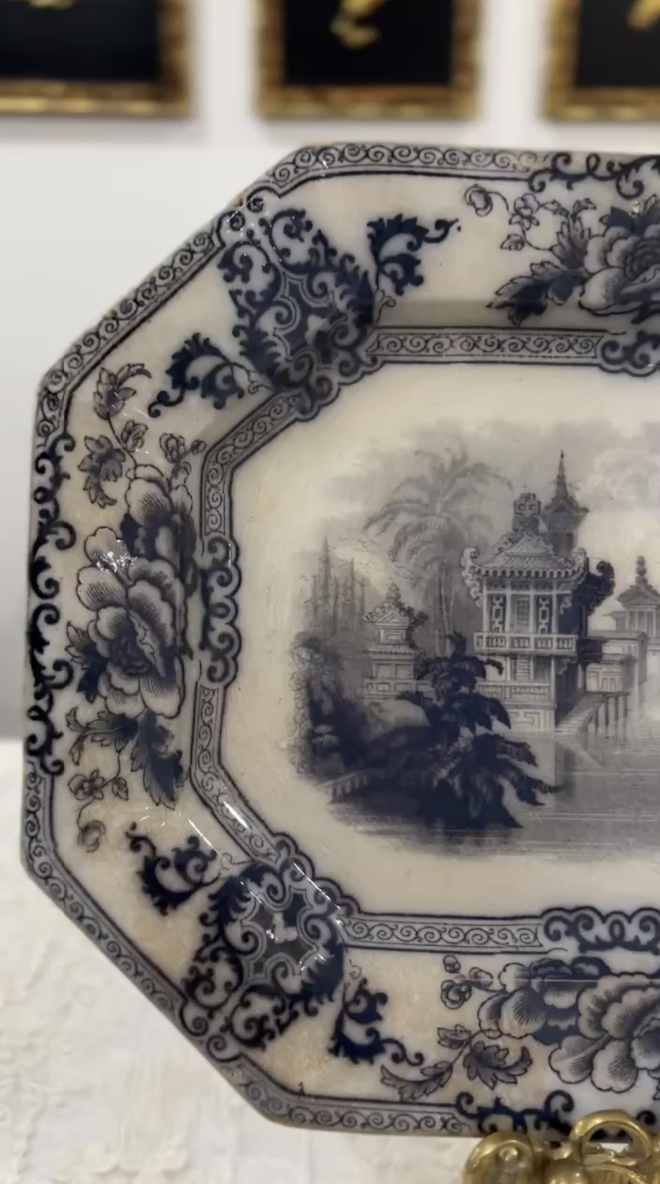 Image 2 of 4
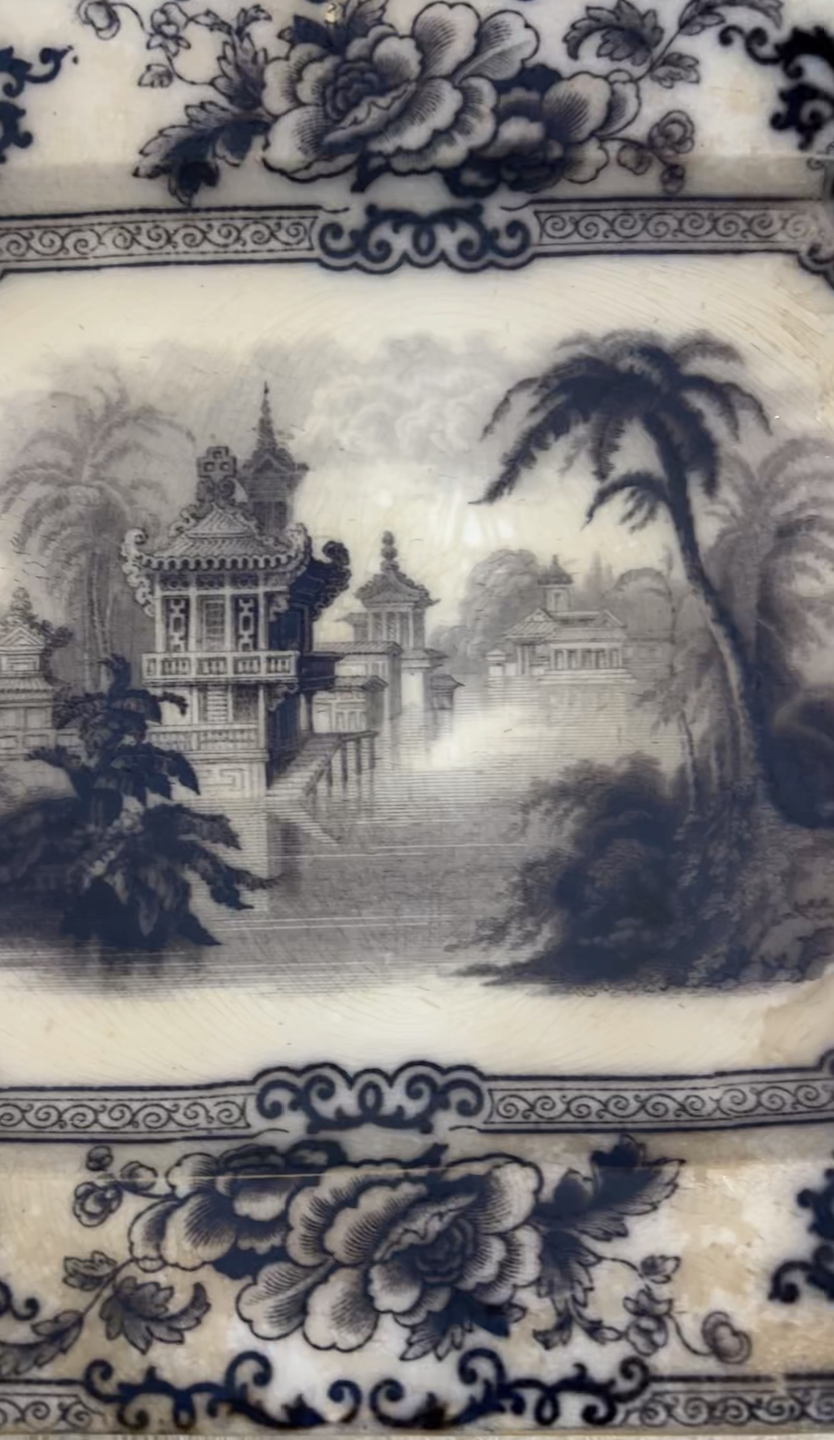 Image 3 of 4
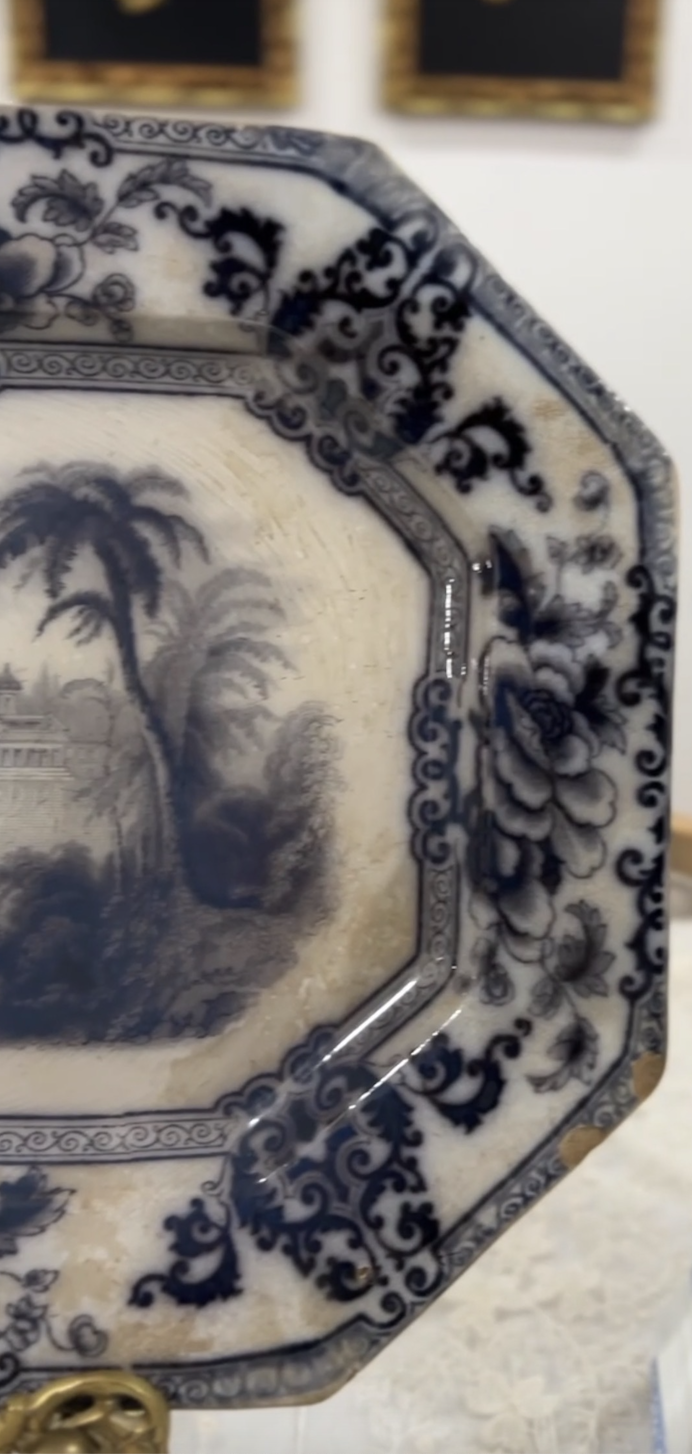 Image 4 of 4