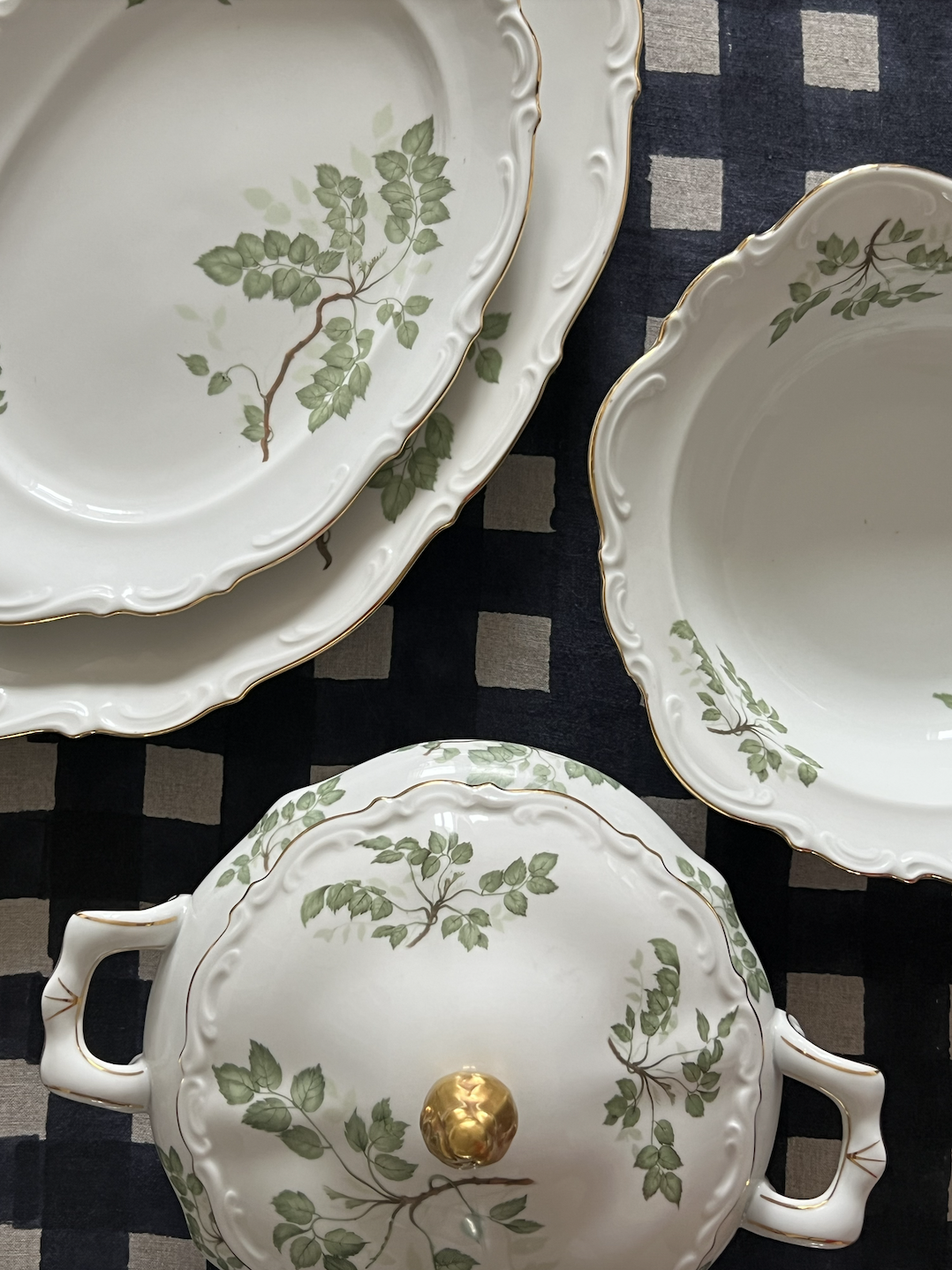
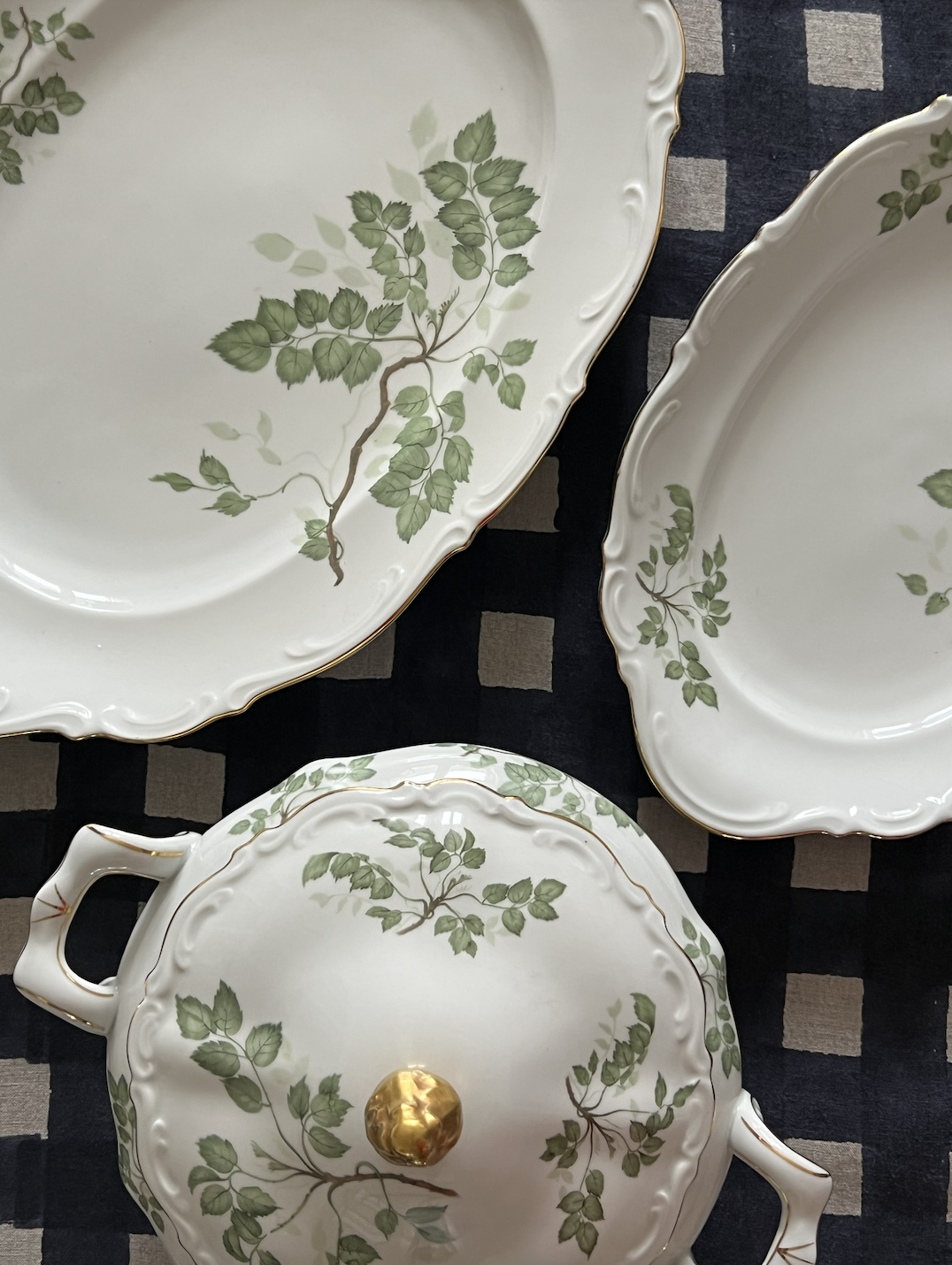
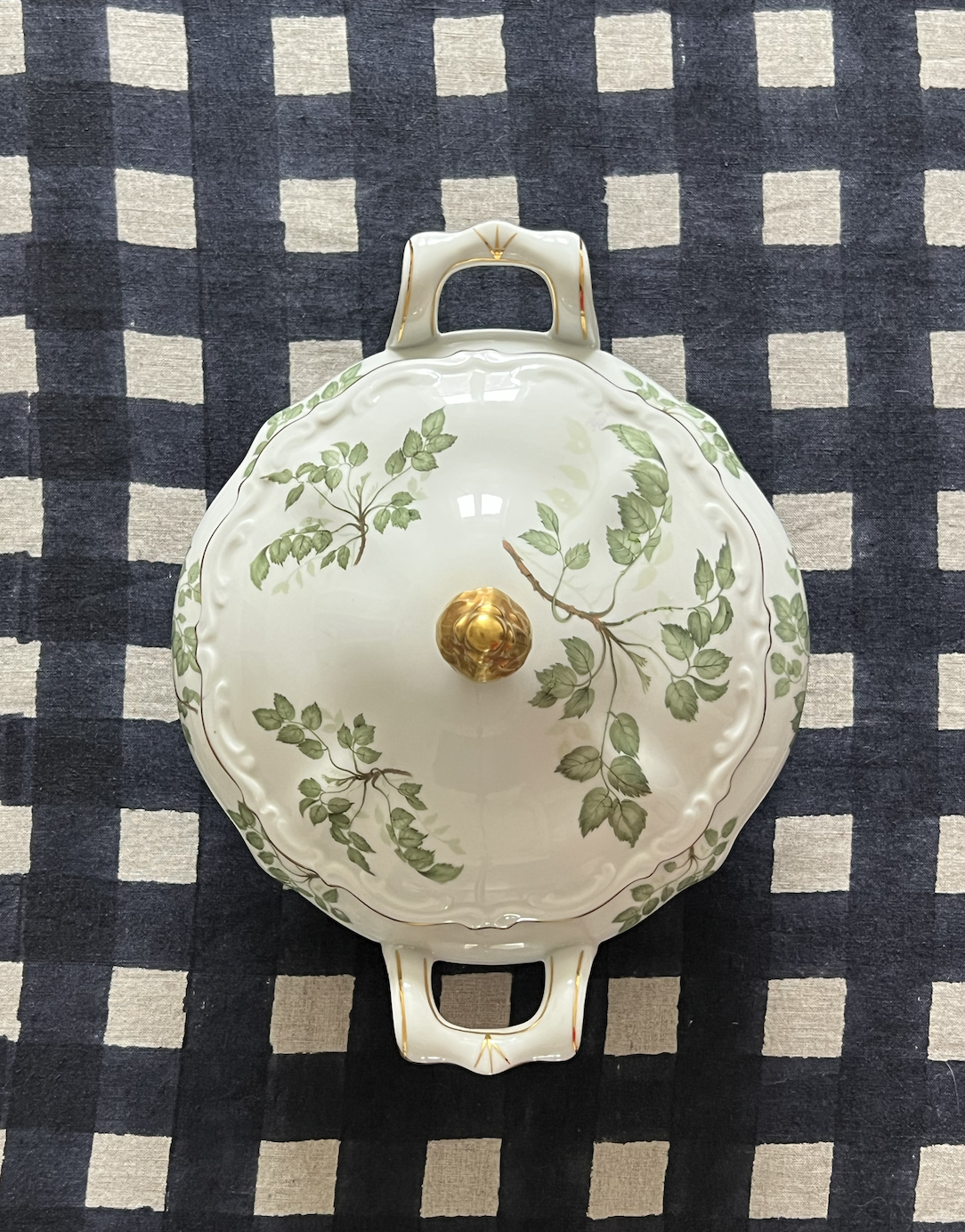
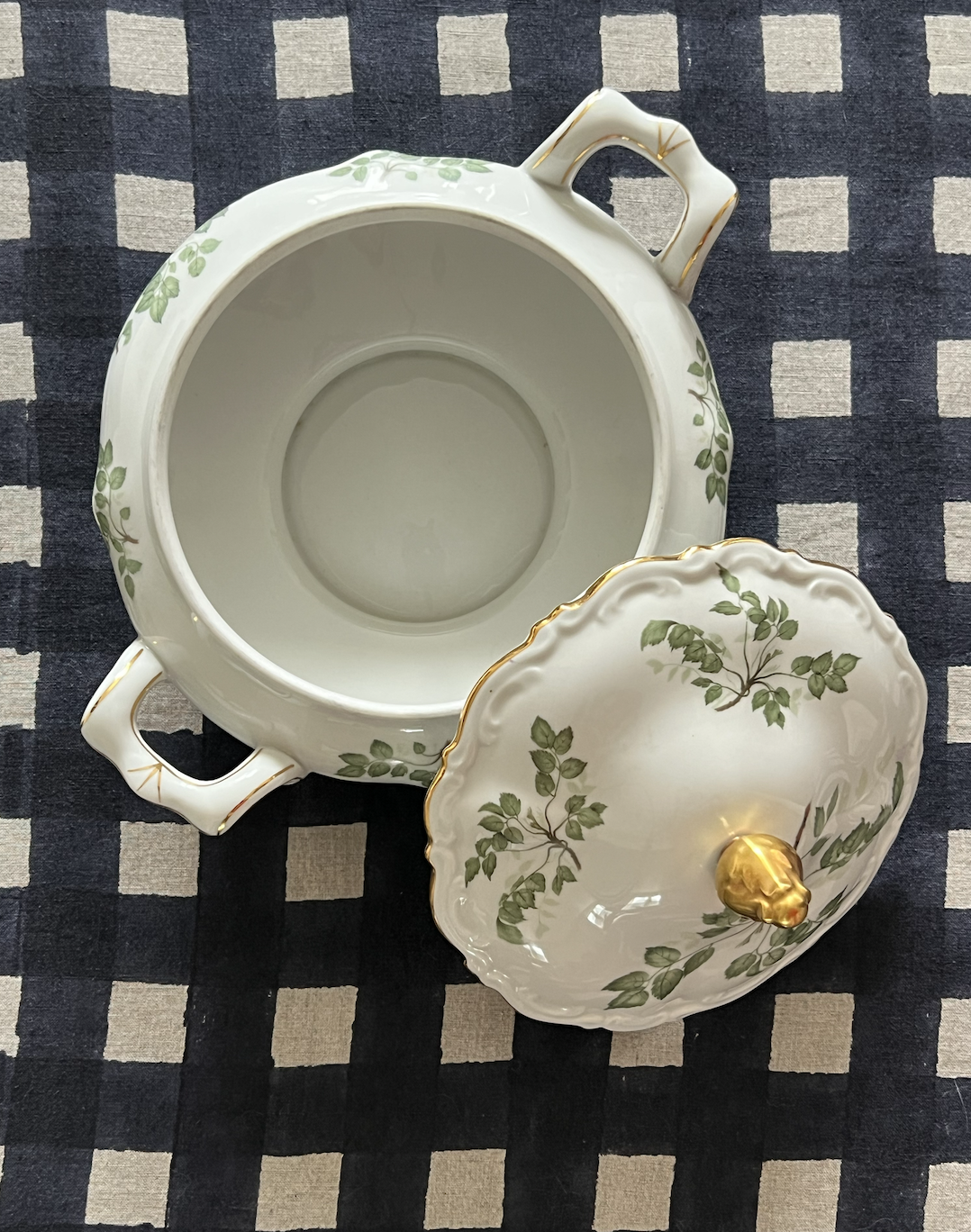
 Image 1 of 3
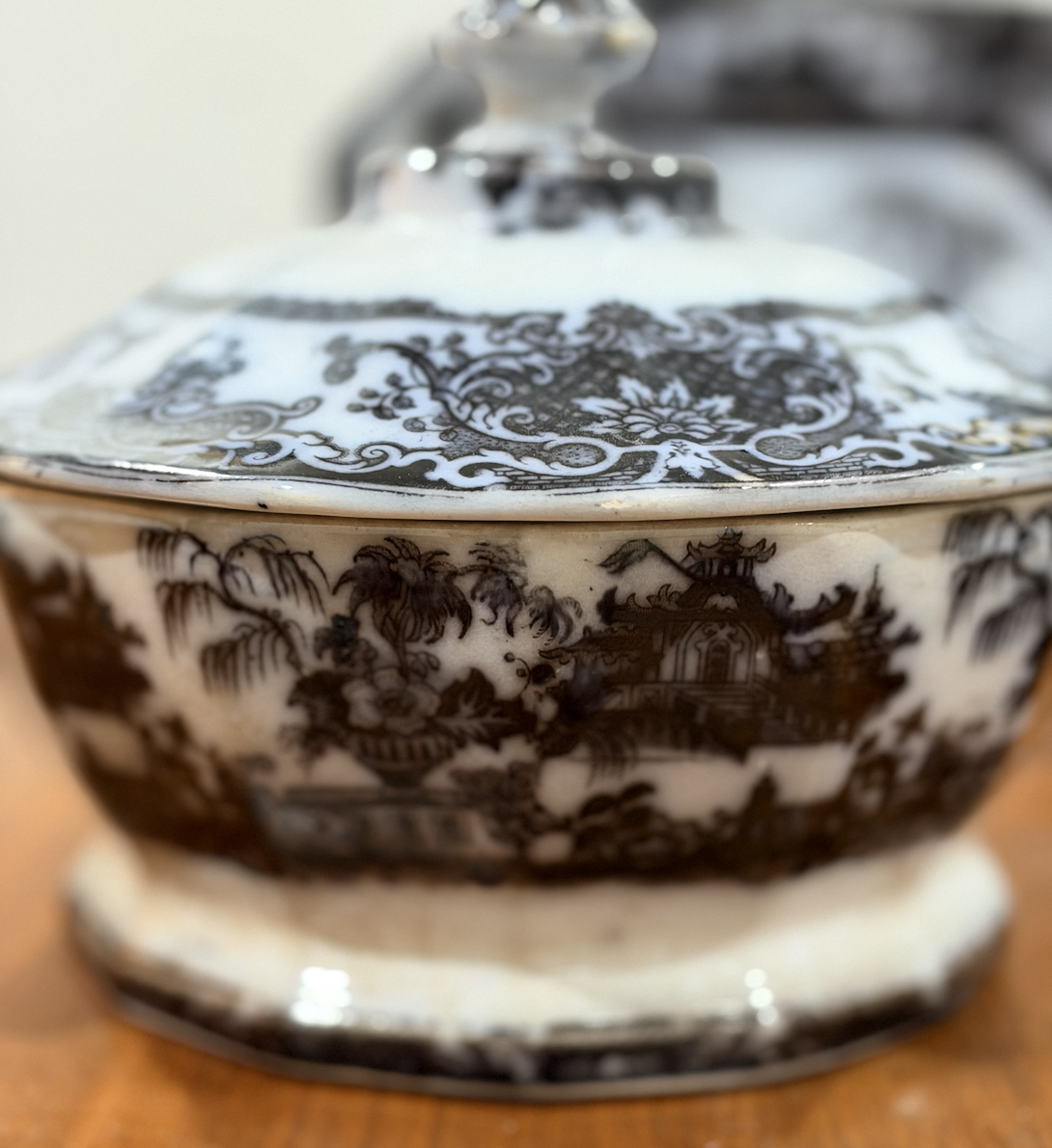 Image 2 of 3
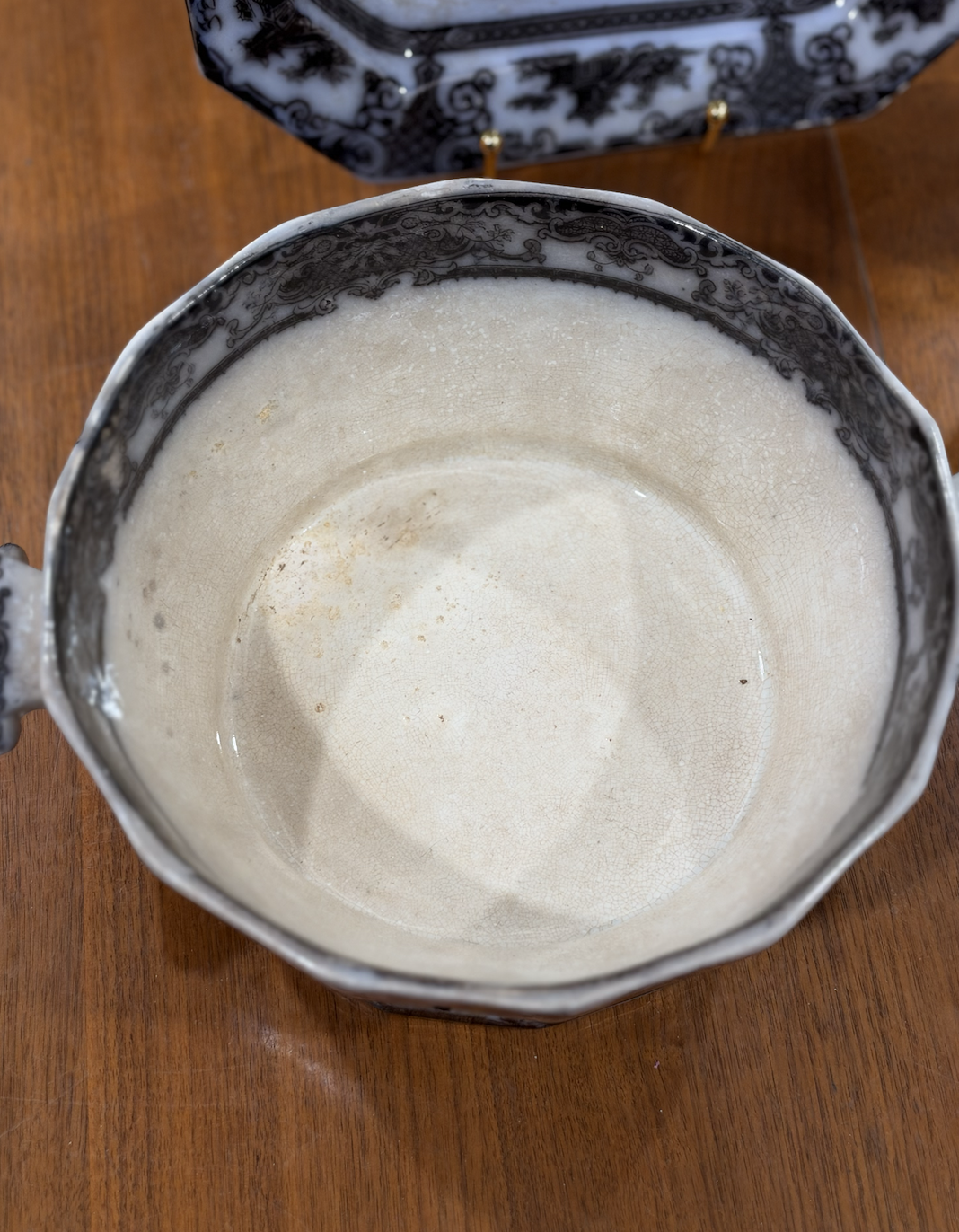 Image 3 of 3
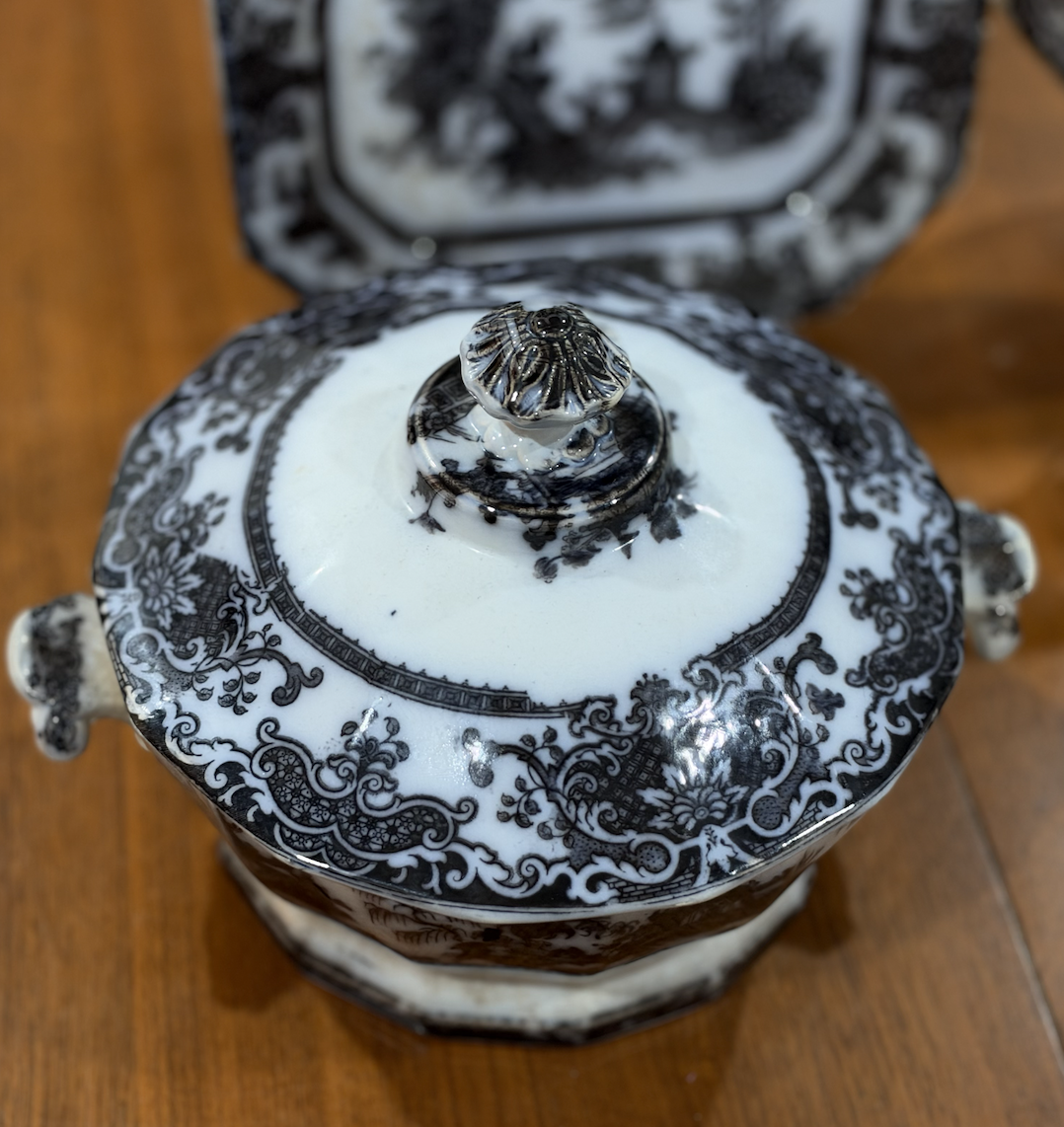
Ink-dark mulberry, drawn on white ironstone.
This is transferware at its moodiest. A rich black-mulberry print, so deep that it reads like ink, covers the white ironstone with Asian garden scenes of blossoming trees, pagodas, and lattice, framed by lacy, scrolling borders that curl and swirl around the lid. The color softens at the edges, in the way that mulberry and flow wares do, so the design seems to float on the surface like a watercolor wash. A sculpted flower knob crowns the domed lid, and a pair of scrolled handles flank the paneled body, which stands on a footed base with a faceted edge.
Mulberry is one of the most sought-after colors in antique transferware. It was introduced in the 1820s and 1830s, and it came into its greatest popularity from about 1840 to 1860, when Staffordshire potters printed Asian motifs, florals, and romantic landscapes in shades from reddish-brown to nearly black. Collectors have long loved the color for its depth, and there is growing interest in mulberry and other non-blue transferware today. Every piece carries its own small work of engraving. Transferware is made by engraving a design on a copper plate, printing it in ink on tissue paper, and pressing it onto the pot.
Place it on a sideboard, a hutch, or a farmhouse table, where its dark pattern will stand out against wood, linen, or white walls. It’s a wonderful partner for blue and white, brown transferware, or an all-black collection, and lovely holding a bouquet of white flowers, or sitting on its own as the centerpiece of a moody tablescape. We recommend it for display.
Details
Antique mulberry black transferware covered tureen, white ironstone, Asian garden scene with scrolled borders, flower knob finial, scrolled side handles, footed base, unmarked, 12" x 4"
Tucked inside every set, a little something for first time Tavola customers — a hand-finished vintage passport notebook. Note the piece, the moment, the person you gave it to. One day these pieces will sit in someone else's hands — and they'll know it came from yours.