A face from the 1850s, kept safe in its original case.
This is a mid-1850s sixth-plate ambrotype portrait in an S. Peck & Co. union case, the molded thermoplastic photo case that protected so many family likenesses in 19th-century America. The exterior carries the "Day, Aurora" design, an allegorical relief of the dawn goddess framed by scrolling floral and geometric borders, in the original rich chocolate-brown color. The hinges are intact and move easily.
Open the case and the interior unfolds beautifully. A deeply pressed royal purple velvet pad, embossed with a symmetrical scrollwork pattern, faces the portrait, which sits in an ornate, textured oval gilt brass mat with its outer preserver. Beneath the image tray, the original green paper manufacturer's label remains in place, naming S. Peck's Patent of October 3, 1854, and H. Halvorson's Patent of August 7, 1855, assigned to S. Peck. The label has some light historic water spotting, and the text is still fully readable.
The portrait itself is a wet-plate collodion ambrotype on glass, showing a gentleman in a high collar and wide cravat in the fashion of the mid-1850s. Ambrotypes are a fascinating process. The image is a negative on clear glass, and it appears as a positive against its dark backing.
Union cases were the invention of Samuel Peck of New Haven, Connecticut. They were pressed from a mixture of sawdust and shellac, which was heated and molded into elaborate designs, and the patent is considered the first thermoplastic. This case is a lovely piece of that story, for collectors of early photography, Civil War era keepsakes, and Victoriana.
Tucked inside every order, a little something for first time Tavola customers — a hand-finished vintage passport notebook. Note the piece, the moment, the person you gave it to. One day these pieces will sit in someone else's hands — and they'll know it came from yours.
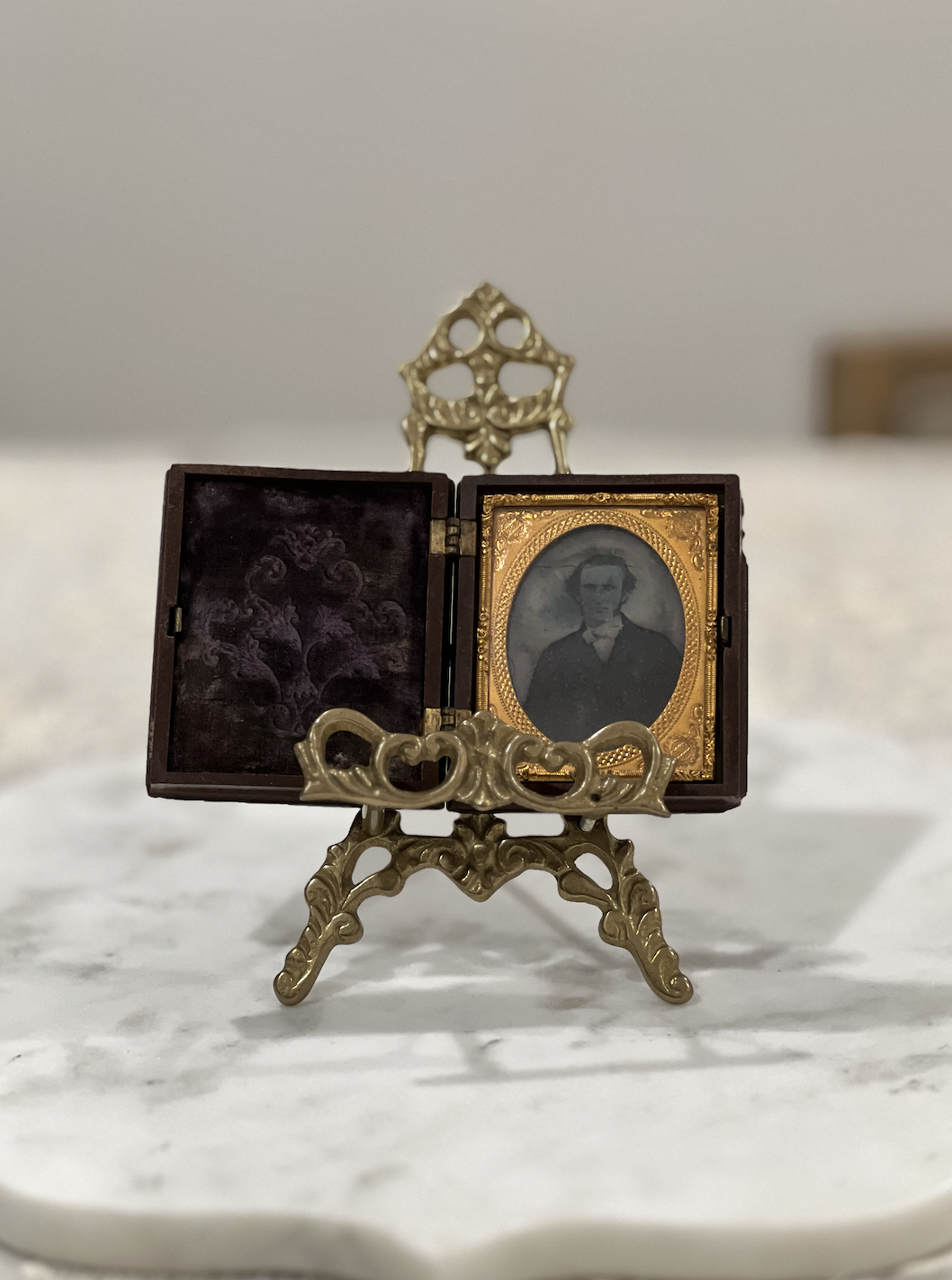 Image 1 of 3
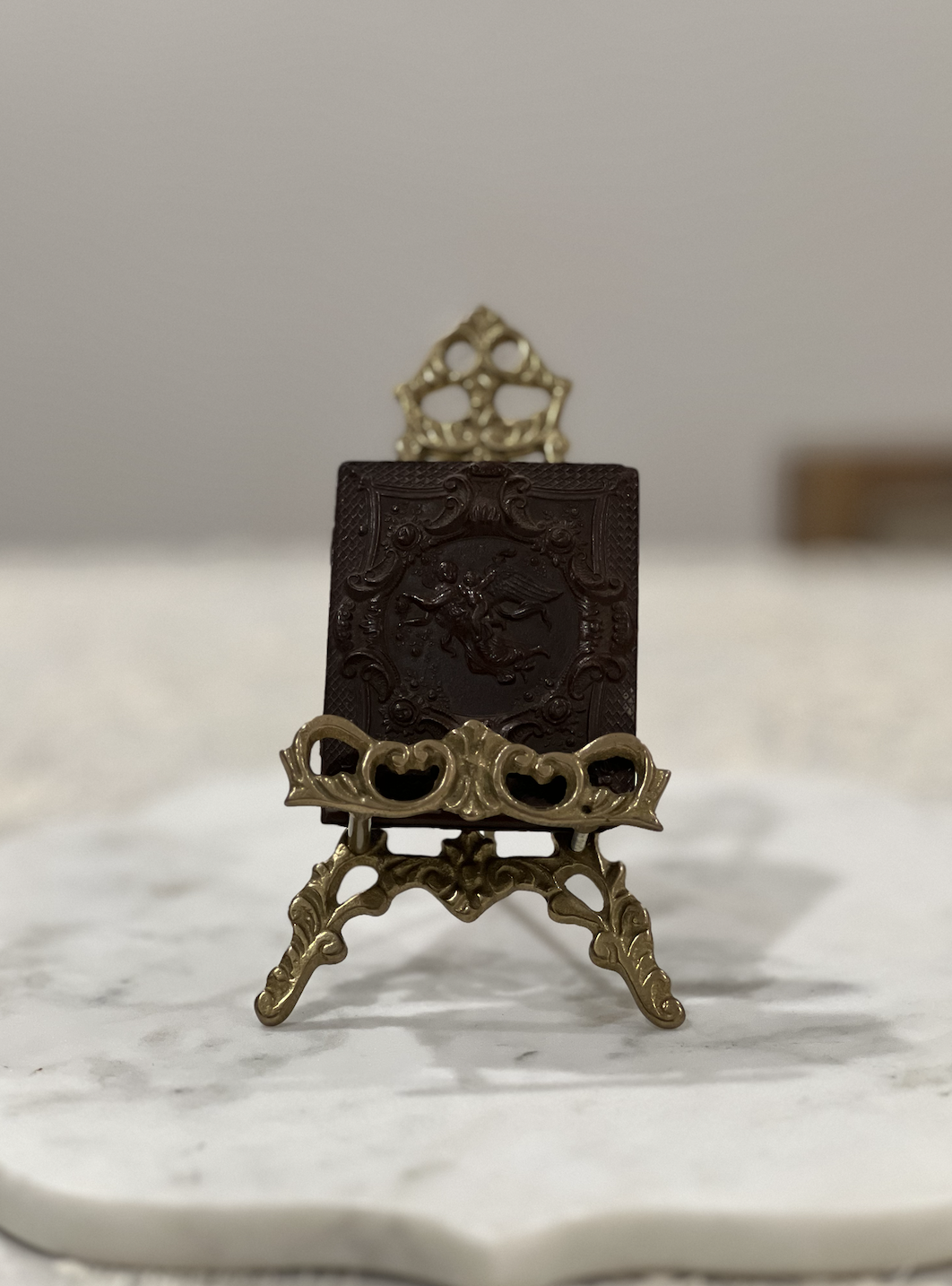 Image 2 of 3
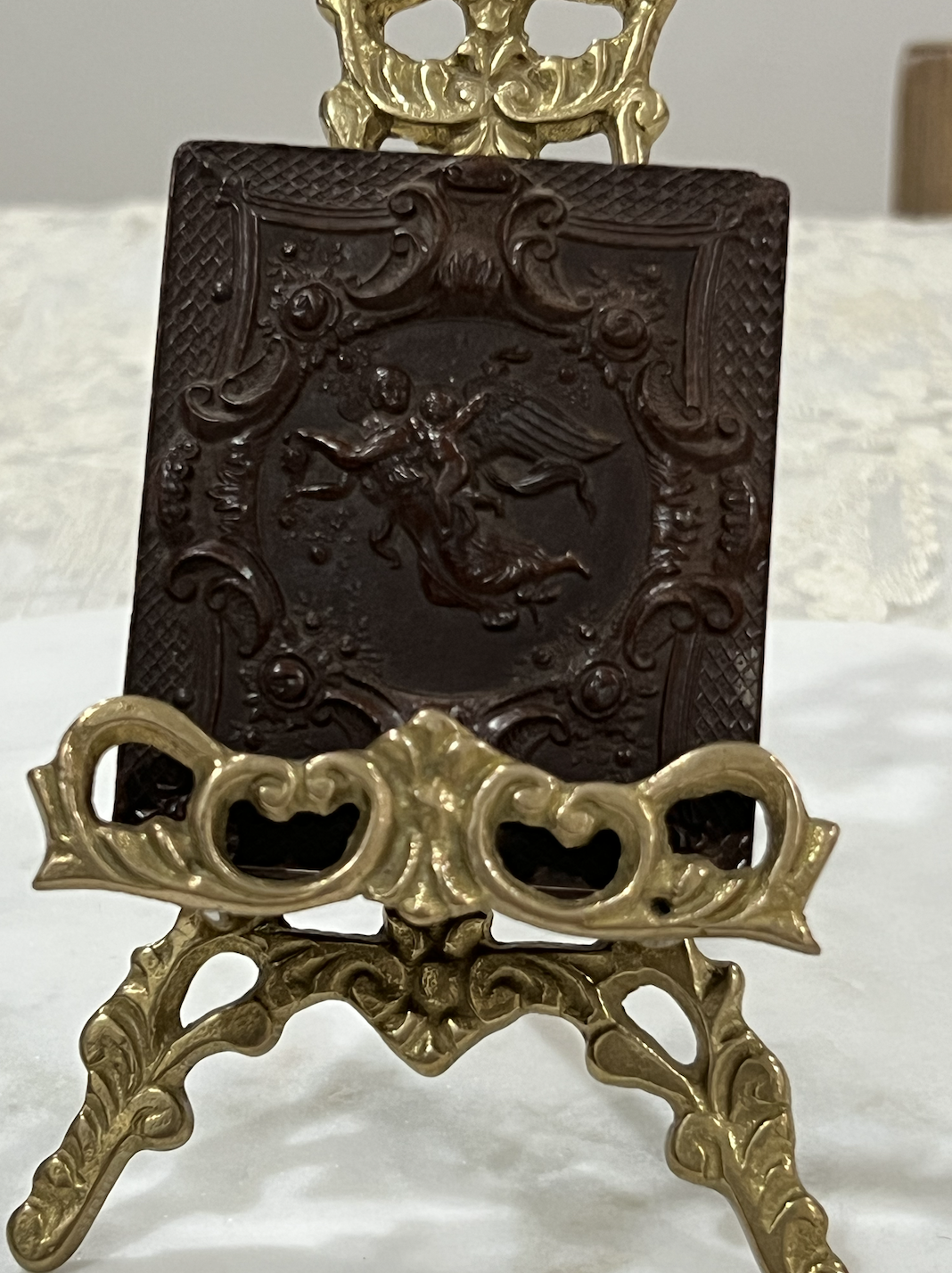 Image 3 of 3