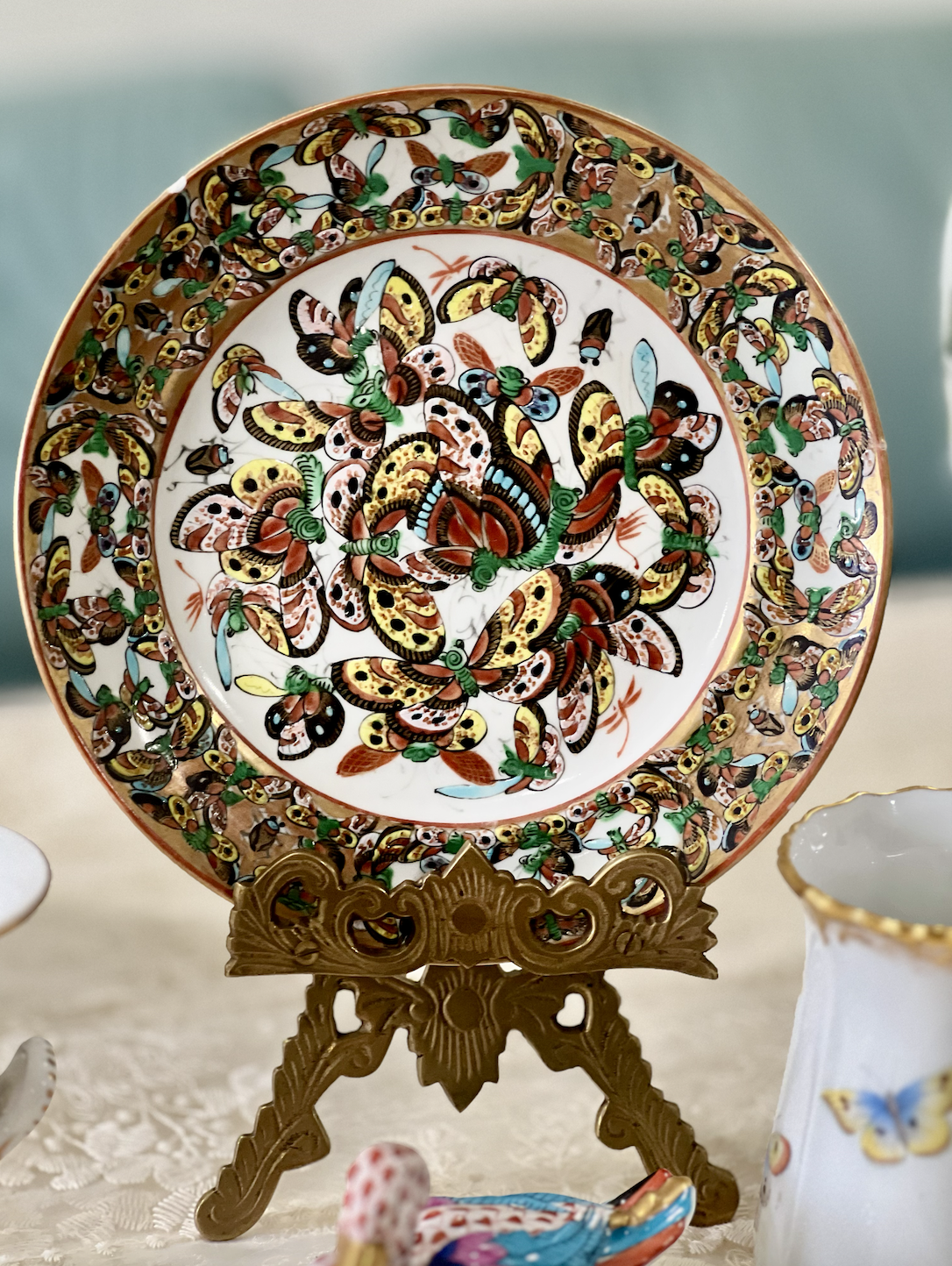
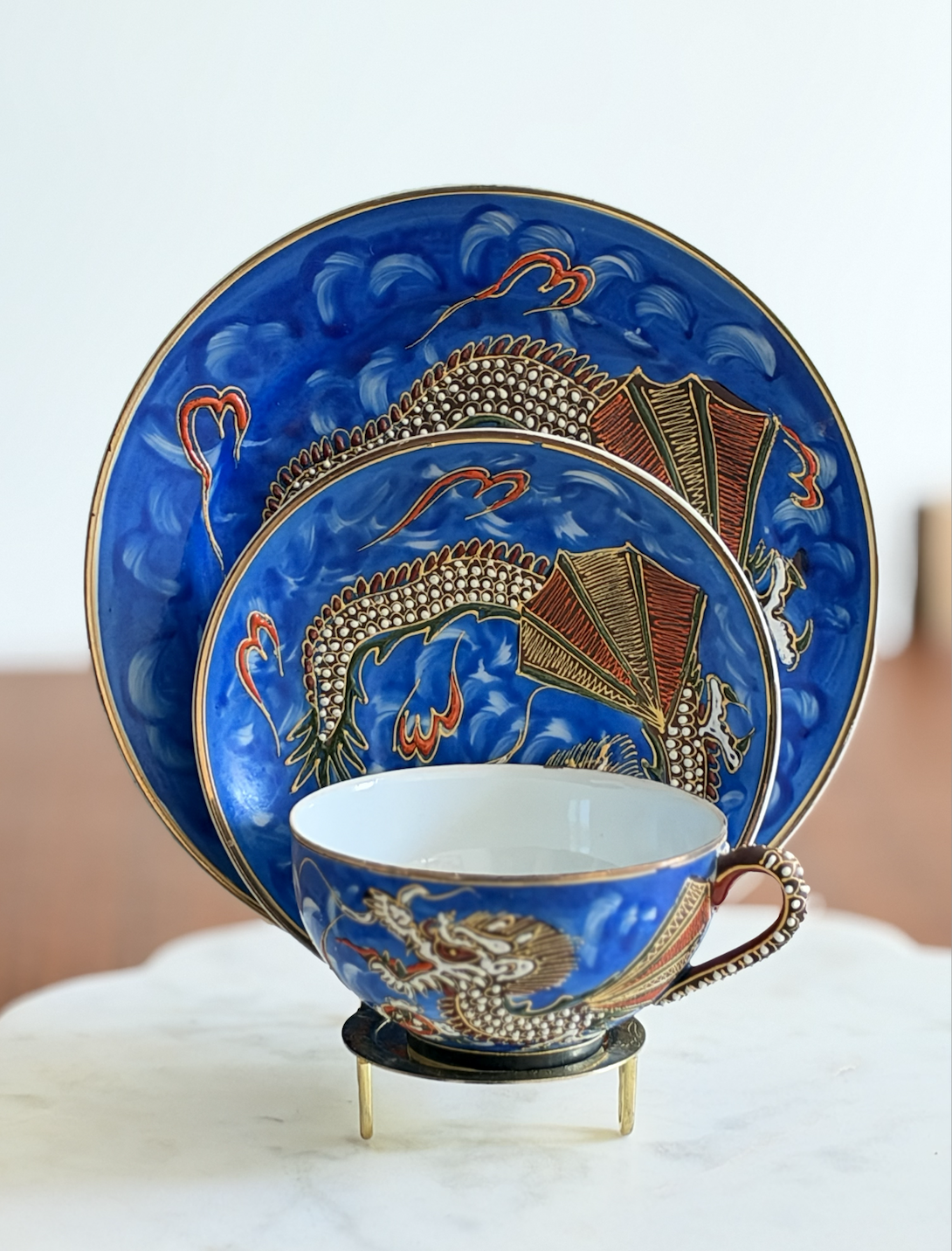
 Image 1 of 5
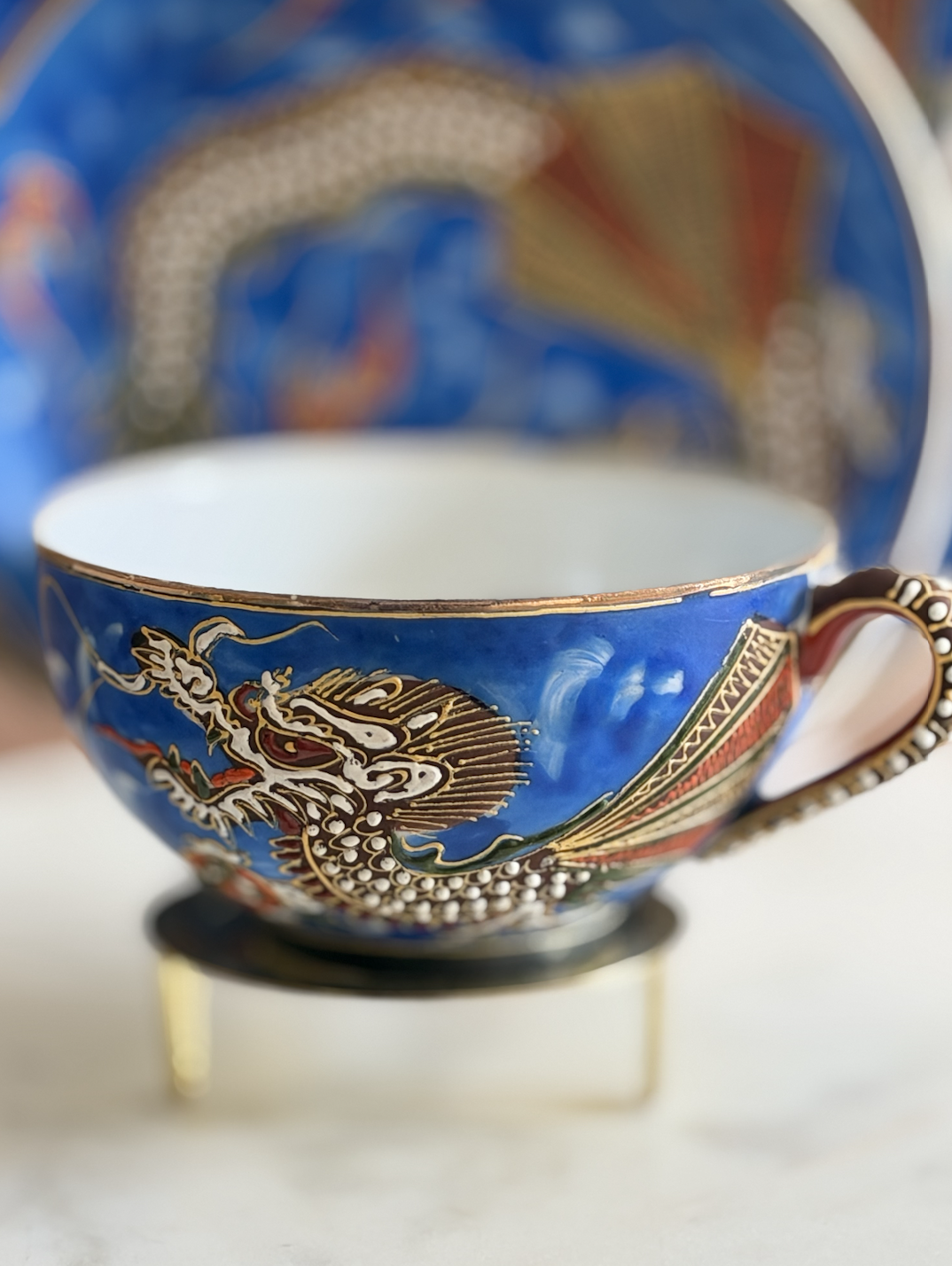 Image 2 of 5
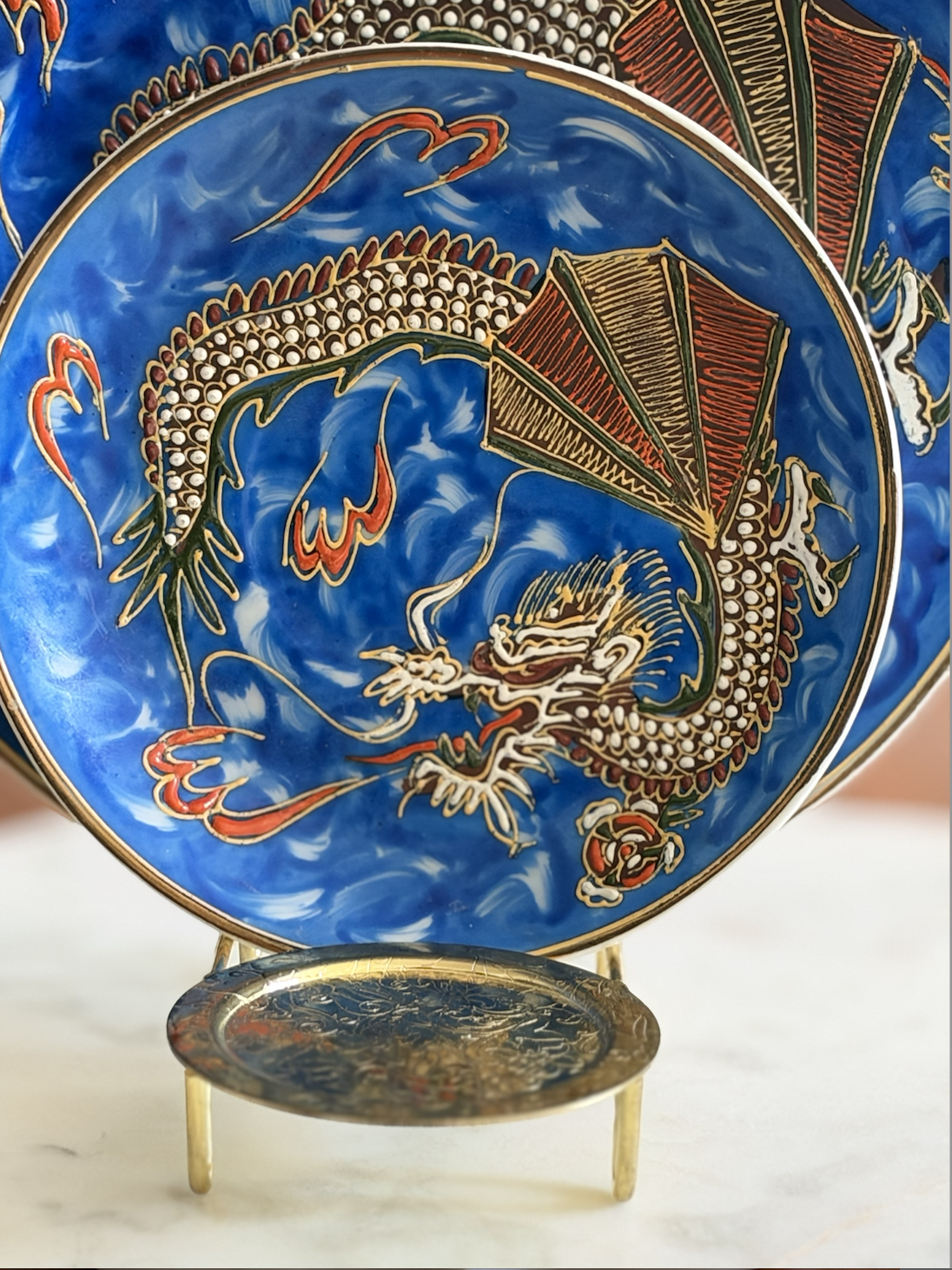 Image 3 of 5
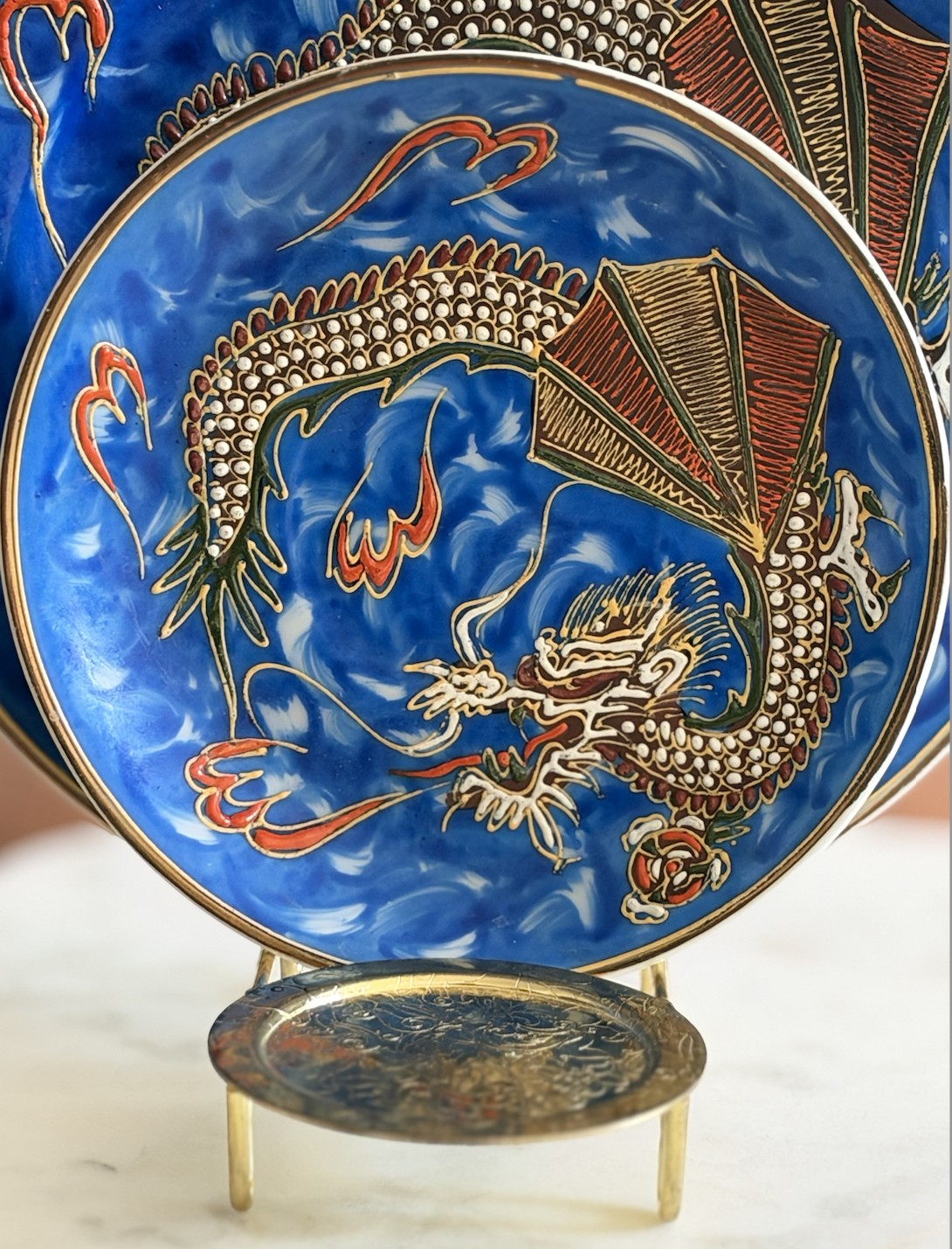 Image 4 of 5
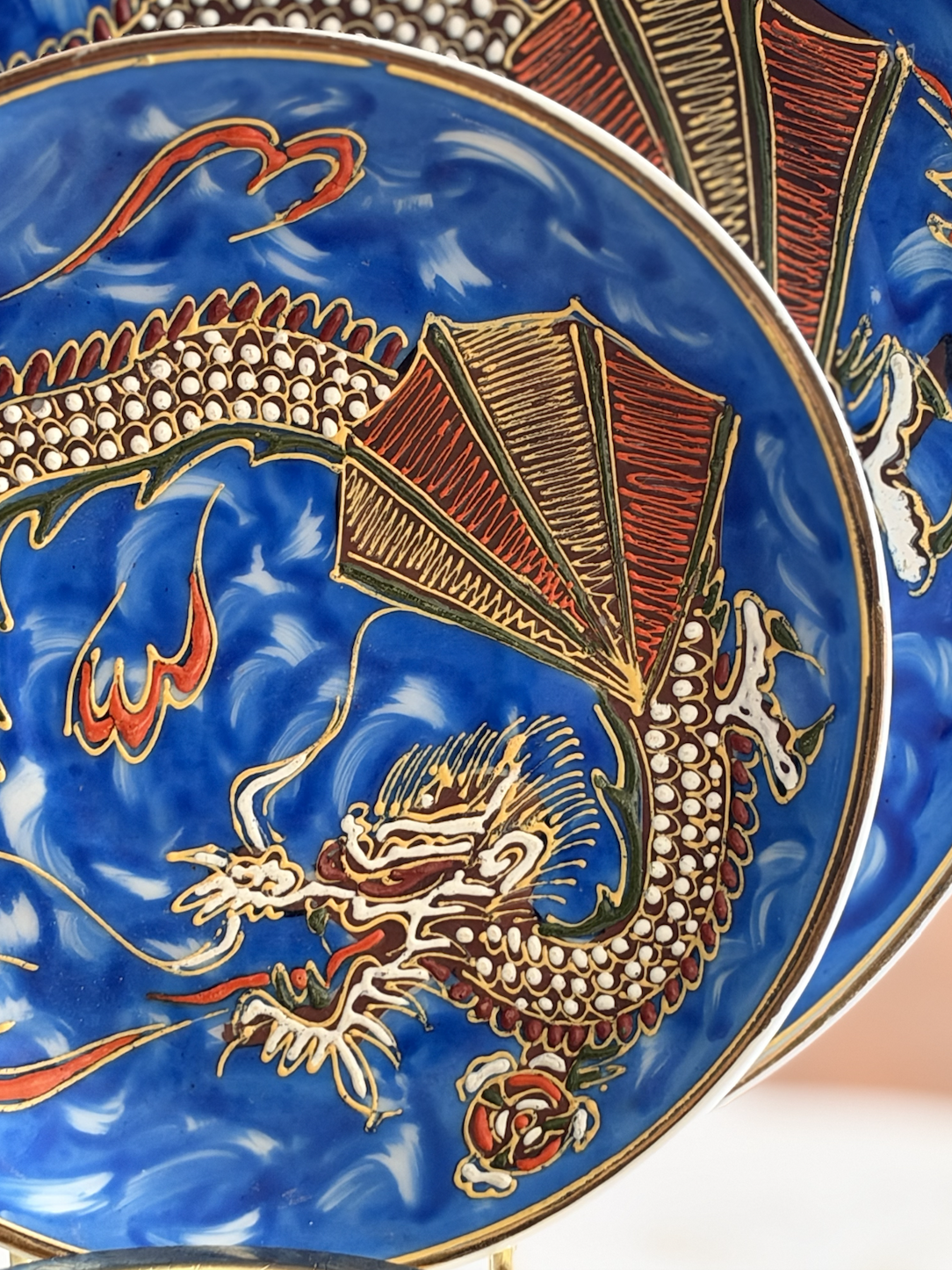 Image 5 of 5
A dragon that rises right off the porcelain.
Run a finger across this teacup, and you’ll feel the dragon. Its scales are raised in rows of tiny beads, built up by hand, dot by dot, and its fanned fins glow in rust, olive, and gold. The dragon coils around the cup, with a fierce white and gold face, and its body winds across the saucer and the plate, through swirling clouds and tongues of flame in orange-red. The royal blue background is painted in loose, flowing strokes with wisps of white, like a sky before a storm, and every piece is finished with a thin gold rim. Even the handle is beaded, and the inside of the cup is a clean, bright white.
This is dragonware, Japanese export porcelain decorated with dragons using a technique called moriage, meaning “raised enamel,” in which thick slip is trailed on through a tube, much like a cake decorator pipes icing. The style dates back to the 1880s, when Japan opened its doors to foreign trade during the Meiji period, and sets in this style were popular for decades. The dragon in Asian art is a symbol of power and good fortune, a protector who brings luck to the home, which makes this set as meaningful as it is dramatic.
Each set includes a teacup, a saucer, and a plate, so it’s a ready-made treat for tea time with a little something sweet. It’s equally striking on display, with the plate set on a stand behind the cup and saucer, and it makes a memorable gift for a tea lover, a collector, or anyone who loves dragons.
Tucked inside every set, a little something for first time Tavola customers — a hand-finished vintage passport notebook. Note the piece, the moment, the person you gave it to. One day these pieces will sit in someone else's hands — and they'll know it came from yours.