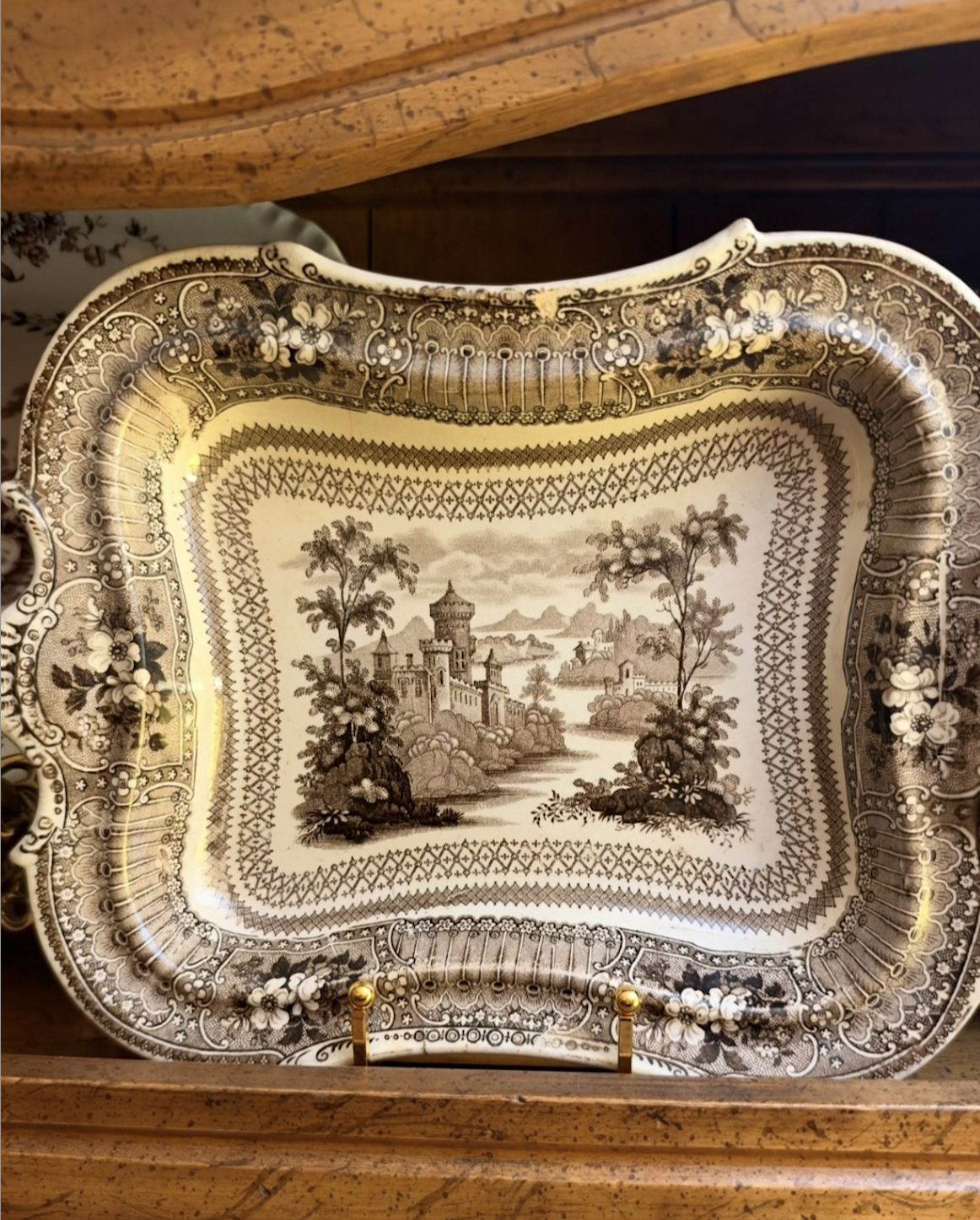
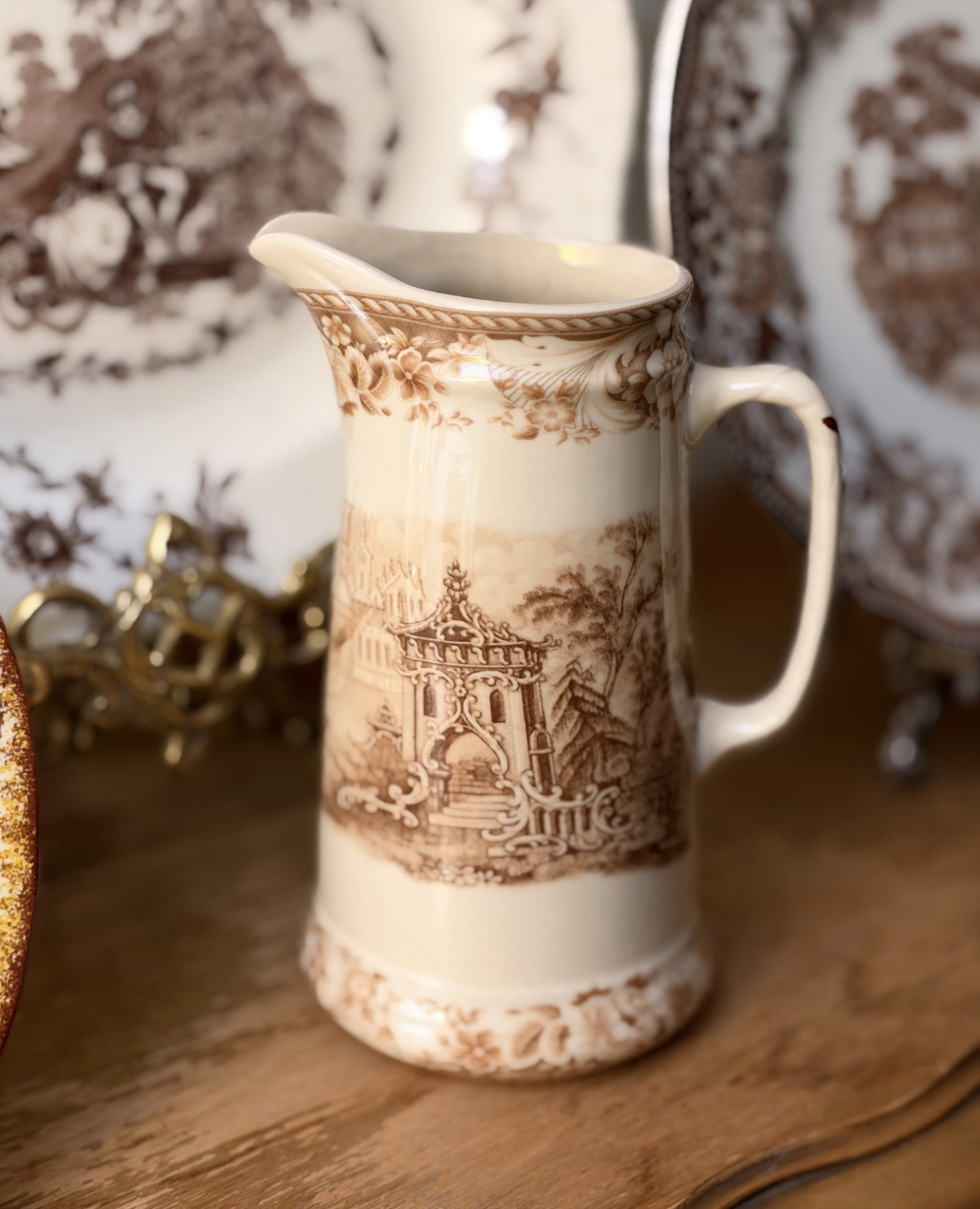
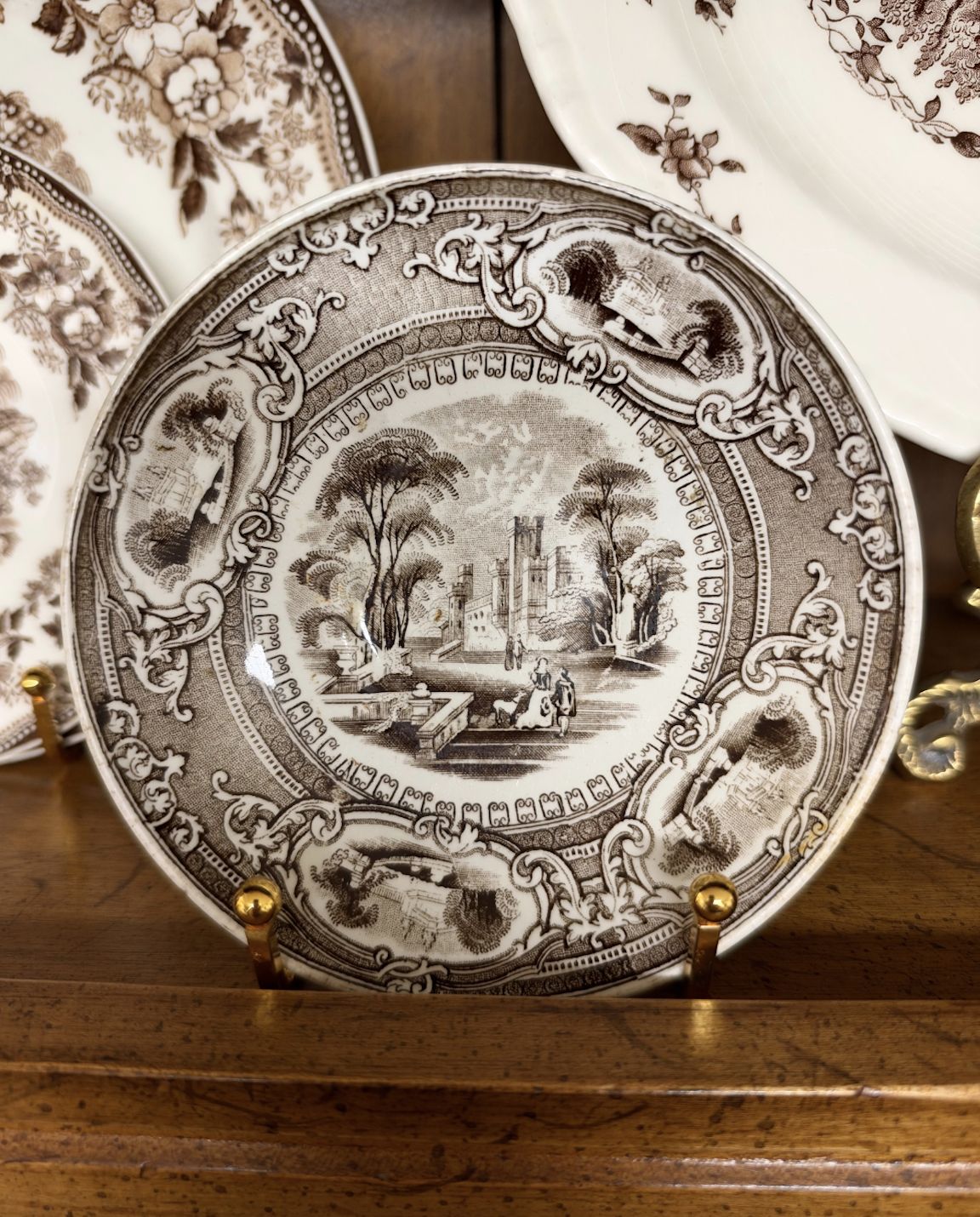
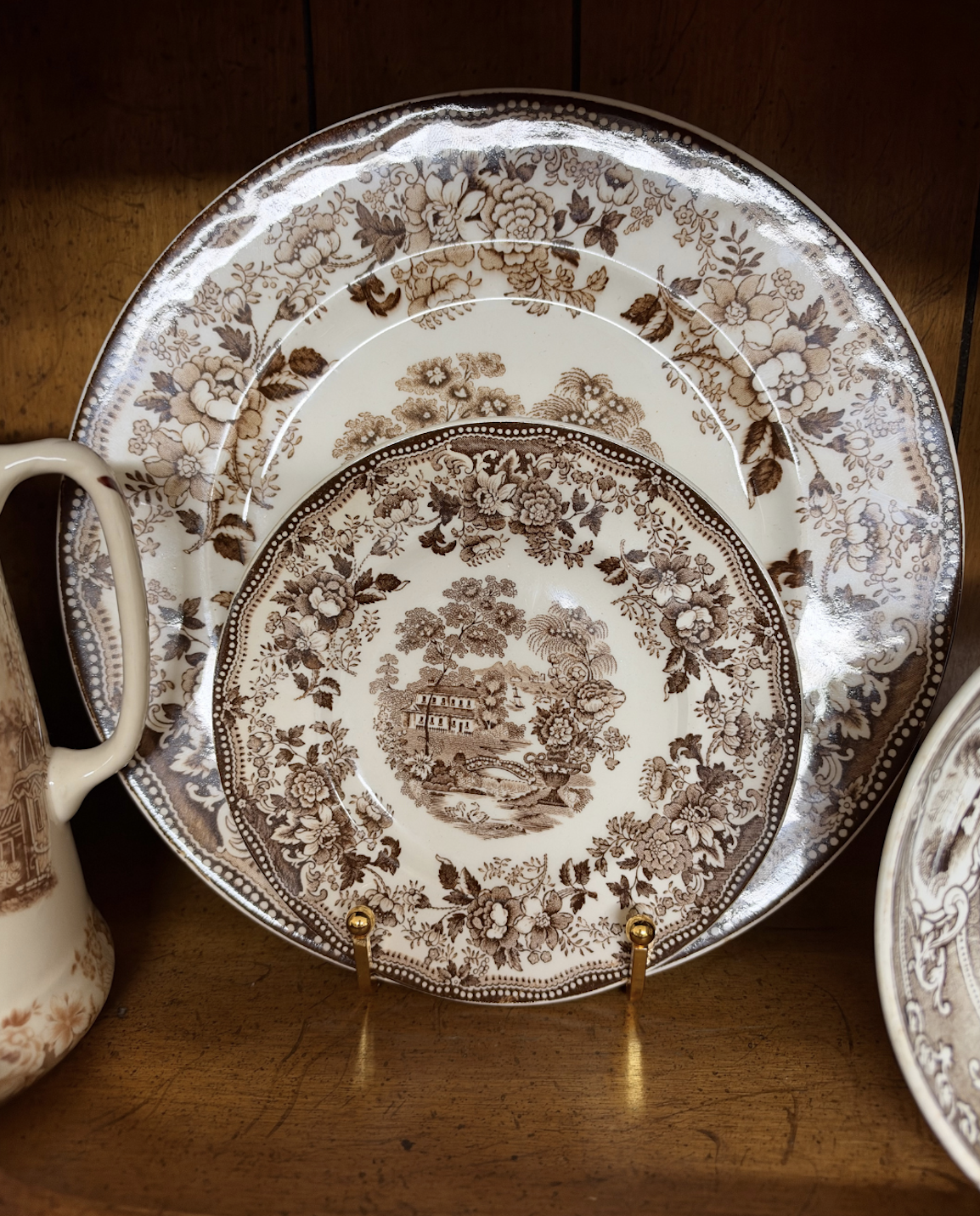
Deep cobalt leaves, softened by the kiln into a haze of blue.
Each of these pieces is covered with a garden of large, veined leaves and tiny buds in a deep, inky cobalt, drawn in fine, engraved lines, and the blue has bled at the edges into the soft, dreamy blur that flow blue is loved for.
The flow effect was a happy accident of the 19th-century potteries, when chemicals added to the kiln made the printed color bleed softly into the glaze. Potters then did it on purpose, and the style became hugely popular.
These pieces were made by Société Céramique of Maastricht, in the Netherlands, a pottery that traces its roots to 1851 on the Wijck site by the river Maas, which is now the Centre Céramique, and which made domestic earthenware for homes at home and abroad. The pitcher is Emma, circa 1900 to 1920, and carries an export backstamp reading "Made in Holland." The basin is Dahlia, circa 1890 to 1910, a pattern recorded in the collection of the Fries Scheepvaart Museum in the Netherlands, which holds 51 pieces of it.
A pitcher and basin like these stood on the washstand in the days before indoor plumbing, where a pitcher of water and a bowl were part of the morning routine. Today, they make a wonderful pair for a dresser, a console, or a bathroom shelf. Nest the pitcher in the basin as a centerpiece, fill it with branches or a bundle of dried lavender, or let the basin hold fruit, flowers, or guest towels.
Choose your piece:
Société Céramique "Emma" Pitcher, 10.5" — a rounded pitcher with a pinched spout, loop handle, and deep cobalt leaves and buds, backstamped "Made in Holland"
Société Céramique "Dahlia" Wash Basin, 15" — a wide, shallow basin with matching cobalt foliage inside and out
Details
"Emma" Pitcher: Société Céramique, Maastricht, Limburg, Netherlands, flow blue transferware, circa 1900 to 1920, 10.5", "Made in Holland" export backstamp, age-related crazing
"Dahlia" Wash Basin: Société Céramique, Maastricht, Limburg, Netherlands, flow blue transferware, circa 1890 to 1910, 15", age-related crazing and fine hairline as visible in pictures.
Tucked inside every set, a little something for first time Tavola customers — a hand-finished vintage passport notebook. Note the piece, the moment, the person you gave it to. One day these pieces will sit in someone else's hands — and they'll know it came from yours.
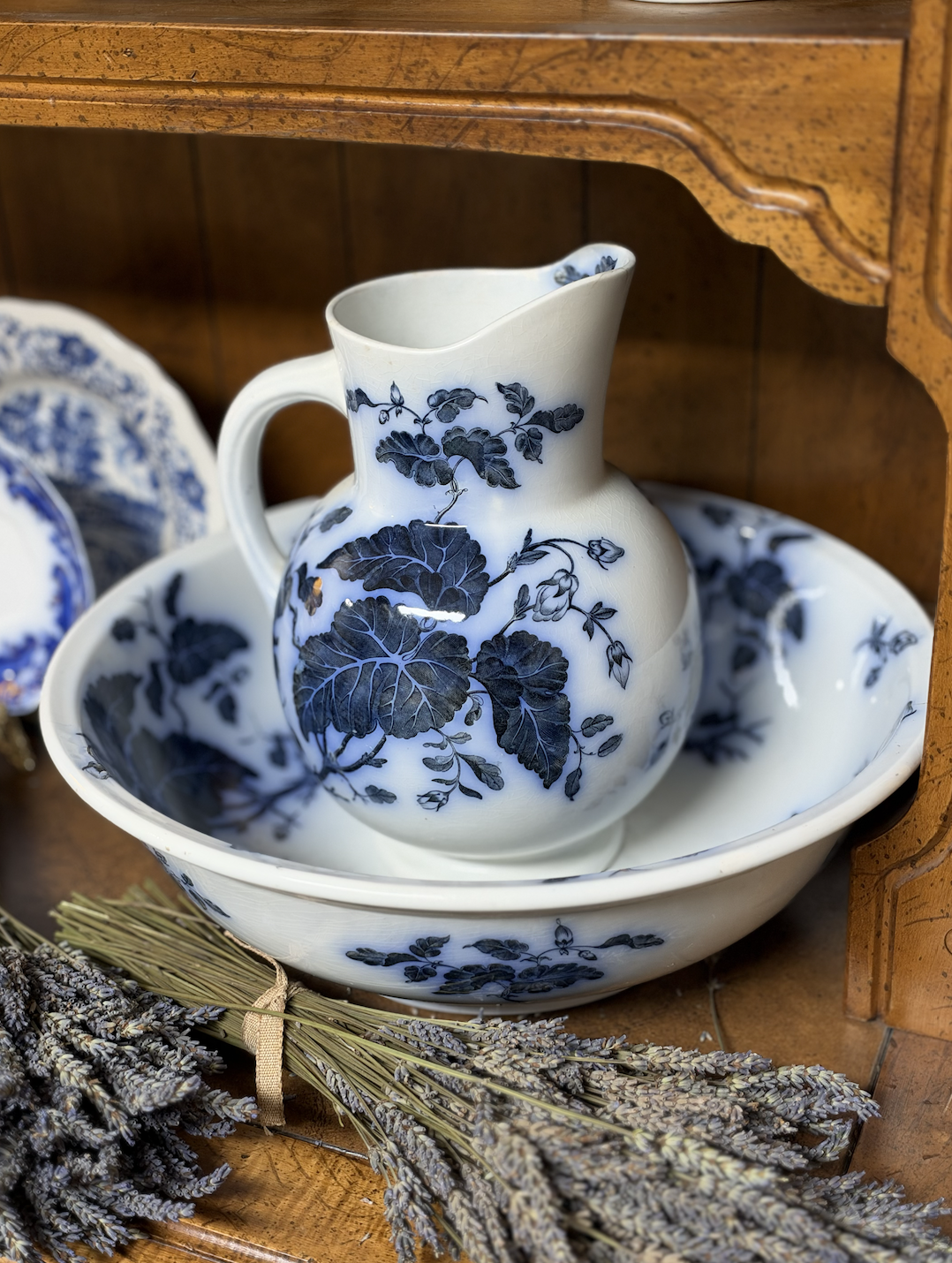 Image 1 of 5
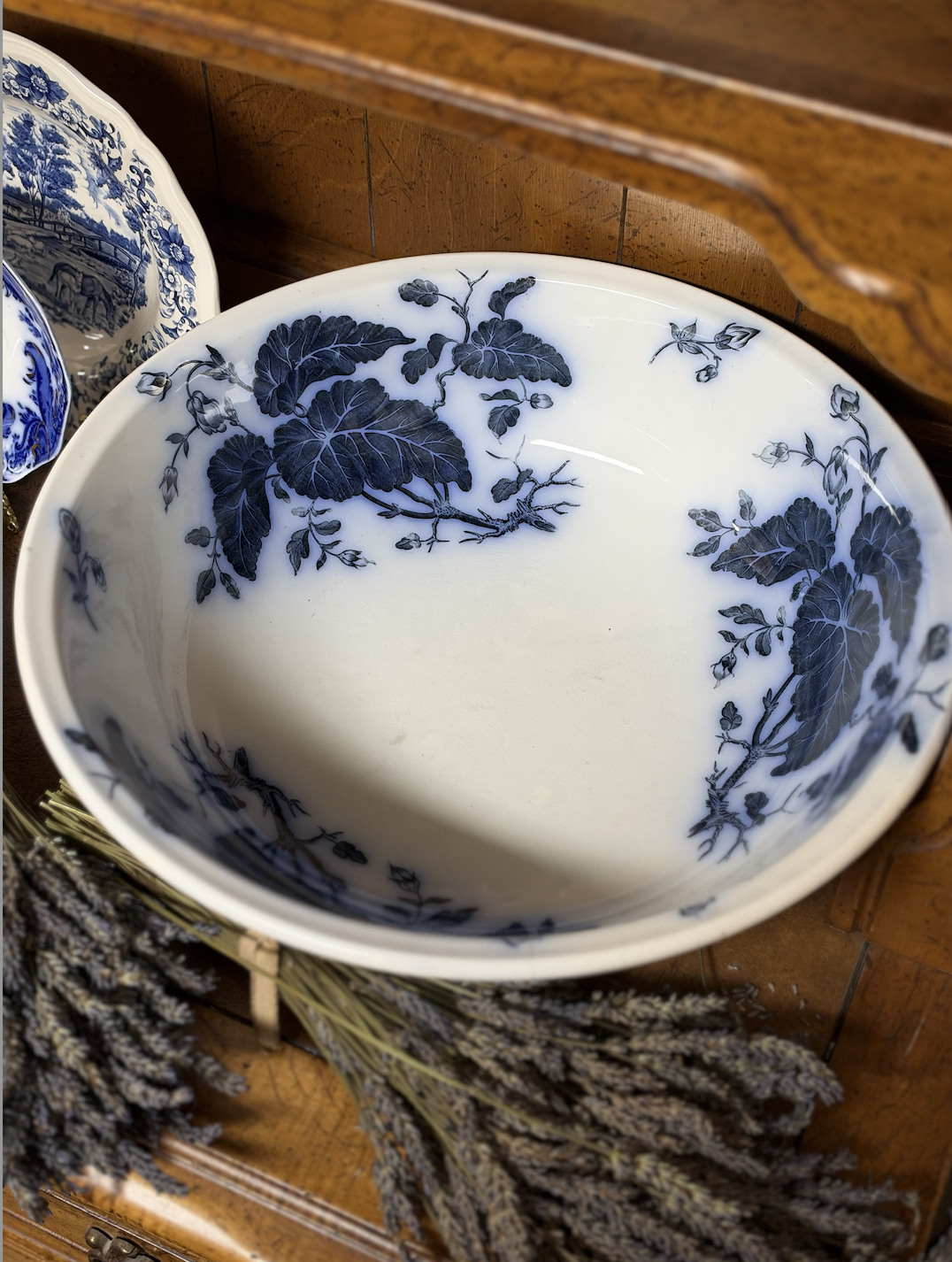 Image 2 of 5
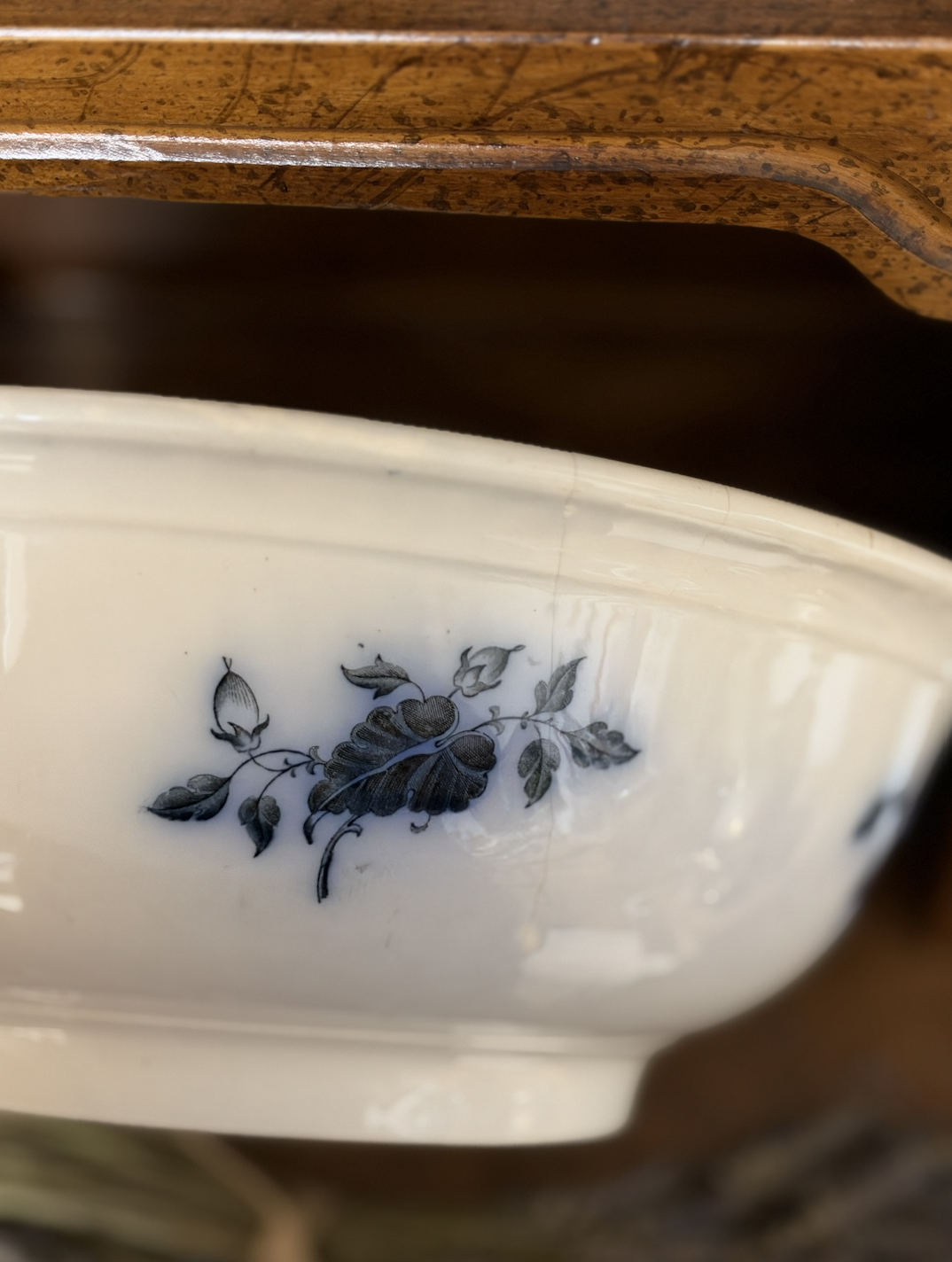 Image 3 of 5
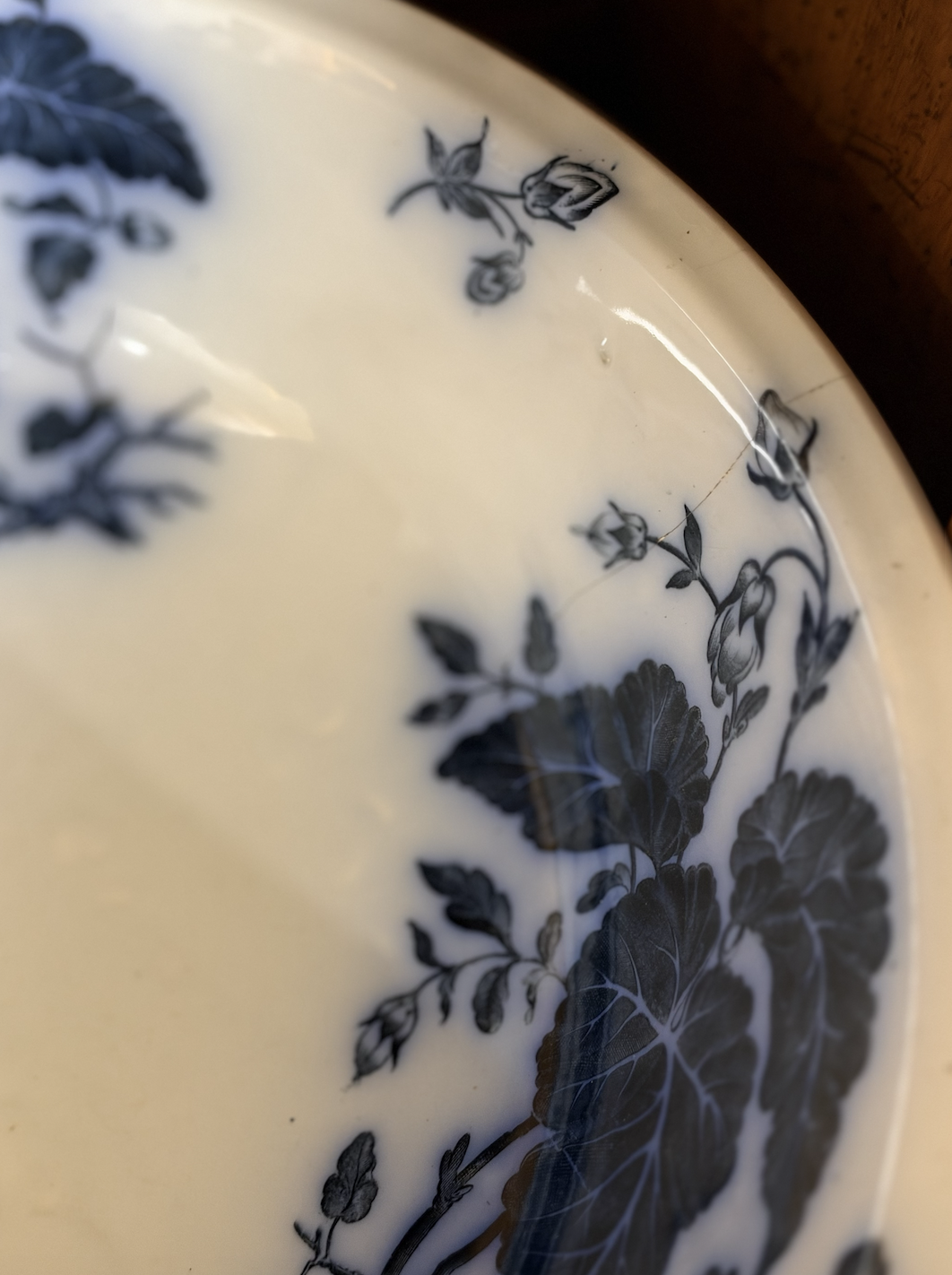 Image 4 of 5
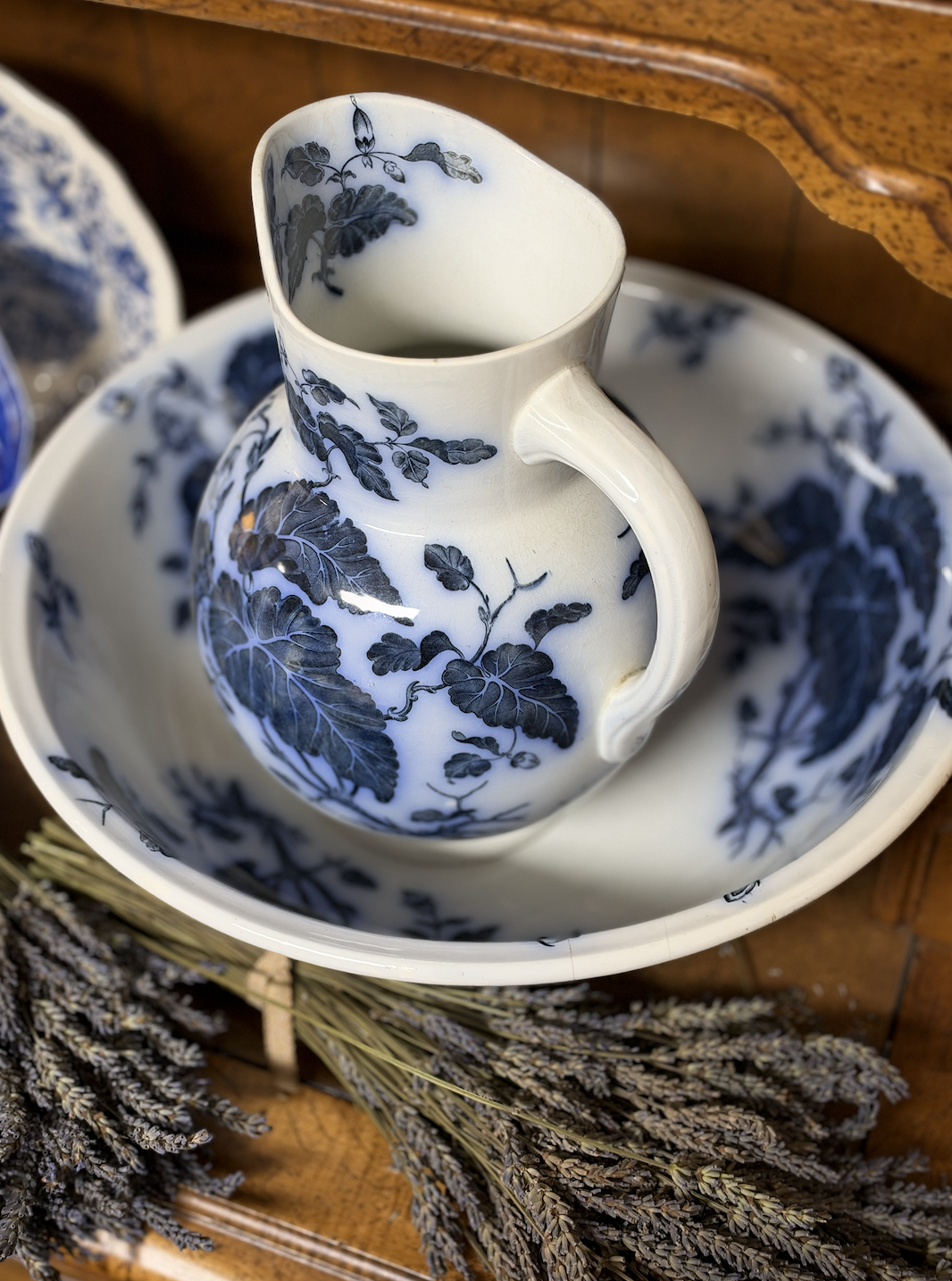 Image 5 of 5