 Image 1 of 3
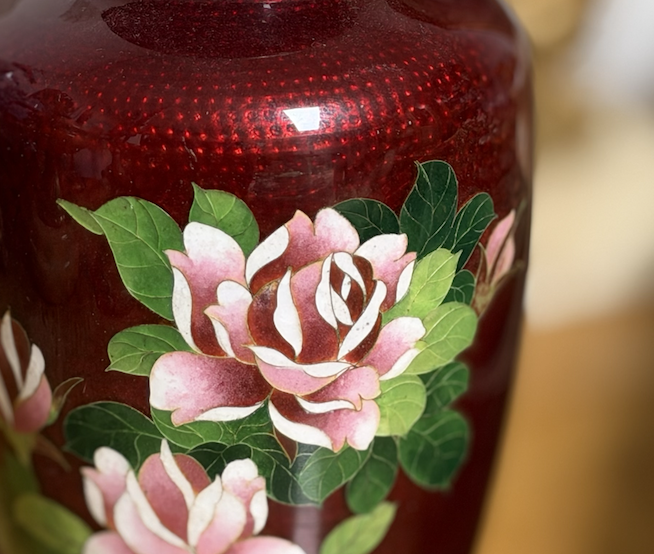 Image 2 of 3
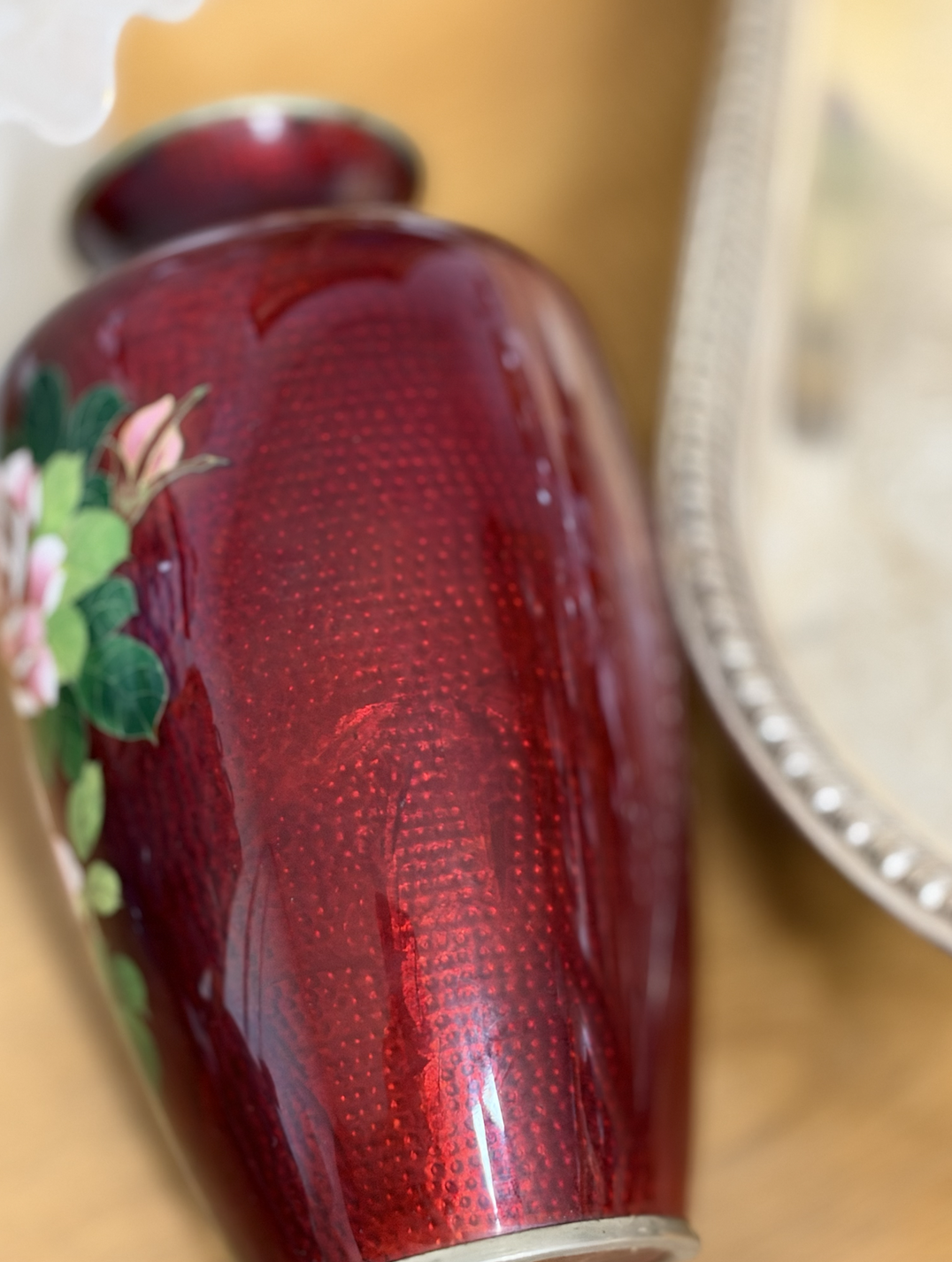 Image 3 of 3
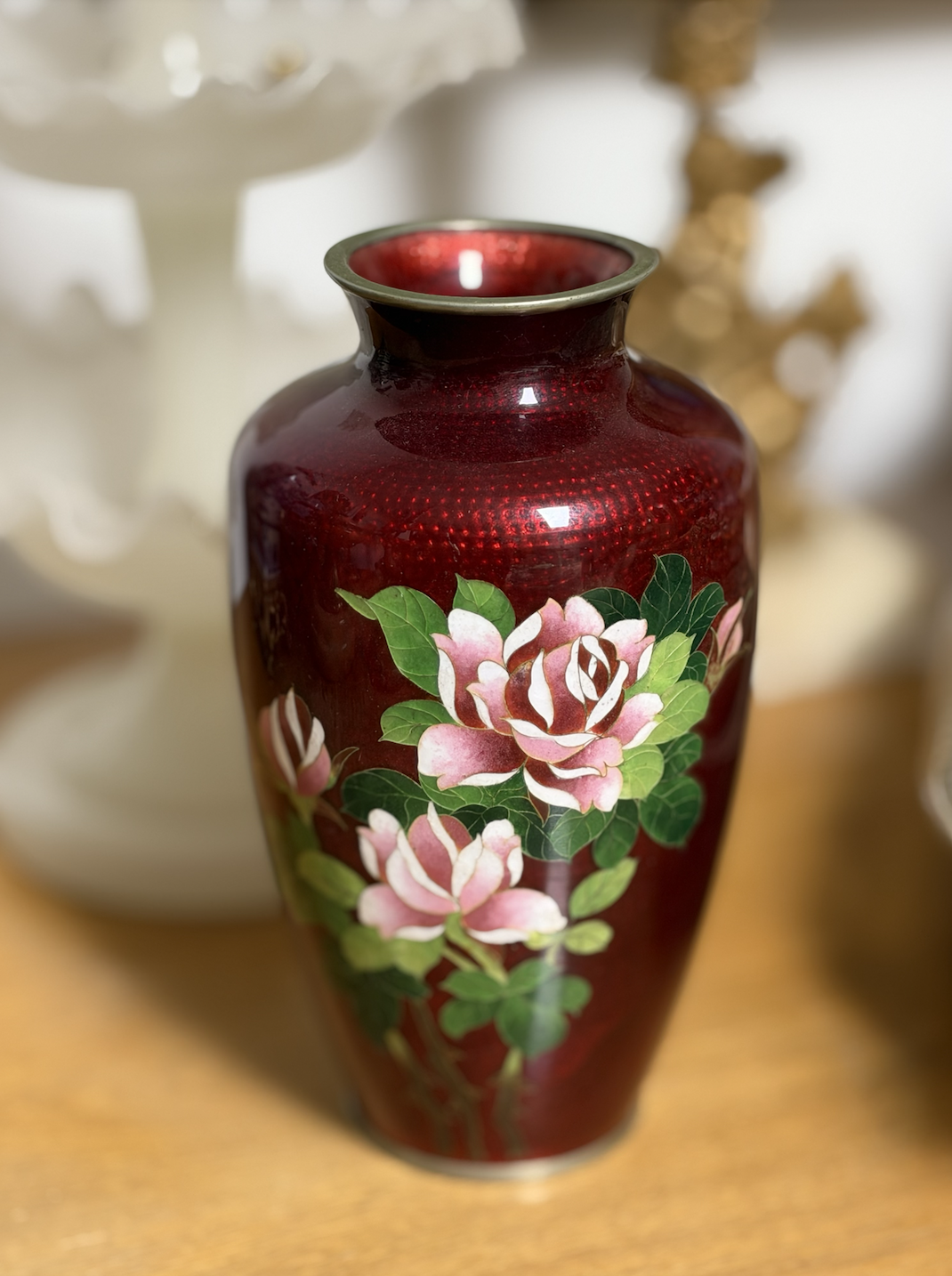
Deep ruby enamel over shimmering silver foil, with a bouquet of pink roses.
The red on this vase is a deep, glassy ruby that seems to glow from underneath. That glow comes from a Japanese technique called ginbari, which means "silver foil." Textured foil is applied to the metal body, and translucent red enamel is fired over it, so the light passes through the enamel, strikes the foil, and bounces back.
The fine, dotted texture shimmers and shifts as you turn the vase. Across the front, pink roses open in petals shaded from blush to white, with a bud on either side, and bright green leaves in several tones give the scene depth. A slim metal band finishes the rim and the foot.
Cloisonné takes its name from the French word for "partition." Thin metal wires are shaped into the outline of the design, and each compartment is filled with powdered glass in color and fired, several times over, before the surface is polished smooth. Japanese cloisonné flourished in the late 1800s and early 1900s, with Nagoya as one of its great centers, and these jewel-toned vases with flowers, birds, and butterflies were made for export and became popular with collectors in the West.
A red vase like this is a bold accent. It looks beautiful with a single stem or a few cut roses, and it is just as striking empty, where its color and shine do the work.
Details
Japanese cloisonné enamel on metal, ginbari (silver foil) technique, ruby red ground with pink rose motif, metal rim and foot
Approx 7.5”
Tucked inside every set, a little something for first time Tavola customers — a hand-finished vintage passport notebook. Note the piece, the moment, the person you gave it to. One day these pieces will sit in someone else's hands — and they'll know it came from yours.