A quiet little moment, caught in bronze.
A young girl in a long pleated skirt stands barefoot at a wall fountain, leaning over the basin to take a drink. Above her, a lion mask spouts water from the wall, and a curling vine of leaves and blossoms frames the scene in the flowing, botanical lines of the Art Nouveau style.
The bronze has the rich, warm patina of a piece that has been held and handled, with a soft golden glow along the base and a touch of green verdigris in the bowl of the fountain. Every detail is modeled in deep relief, from the folds of her dress and the curls of her hair to the ridged basin and the stones at her feet.
It's a scene that is still part of daily life in Italy, where children stop at the fountains in the squares to drink and wash their hands, and it carries a bit of that warmth wherever it sits. Lion-head spouts have decorated fountains since Roman times, and Art Nouveau artists around 1900 loved to bring such scenes to life, with natural forms, graceful lines, and everyday moments elevated into art. Bookends became a popular decorative object in the early 20th century, when a shelf of books was something to arrange as beautifully as a table, and a piece like this does both jobs, holding a row of books and standing as a small work of sculpture.
It's cast in solid bronze, with a weight and a feel that cheaper metals can't match. Use it as a bookend on a shelf or a desk, as a decorative accent on a mantel or console, or as a small sculpture on a table. It's a charming gift for a book lover, a traveler, or anyone who has fallen for Italy.
Details
Solid bronze relief bookend, girl drinking at a wall fountain with a lion mask spout, Art Nouveau style, leafy botanical border, warm brown patina with verdigris, 5.25" x 4.25"
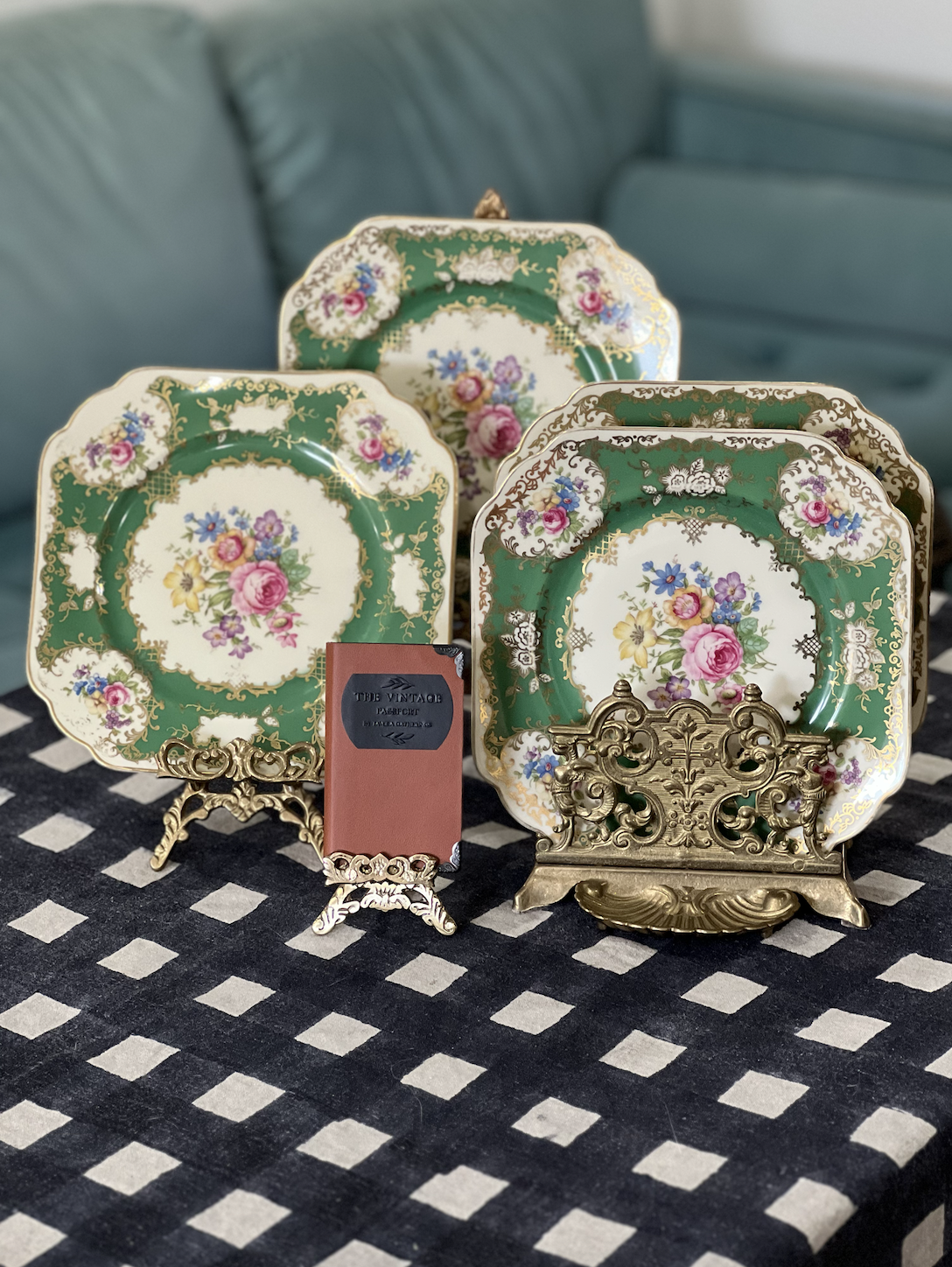
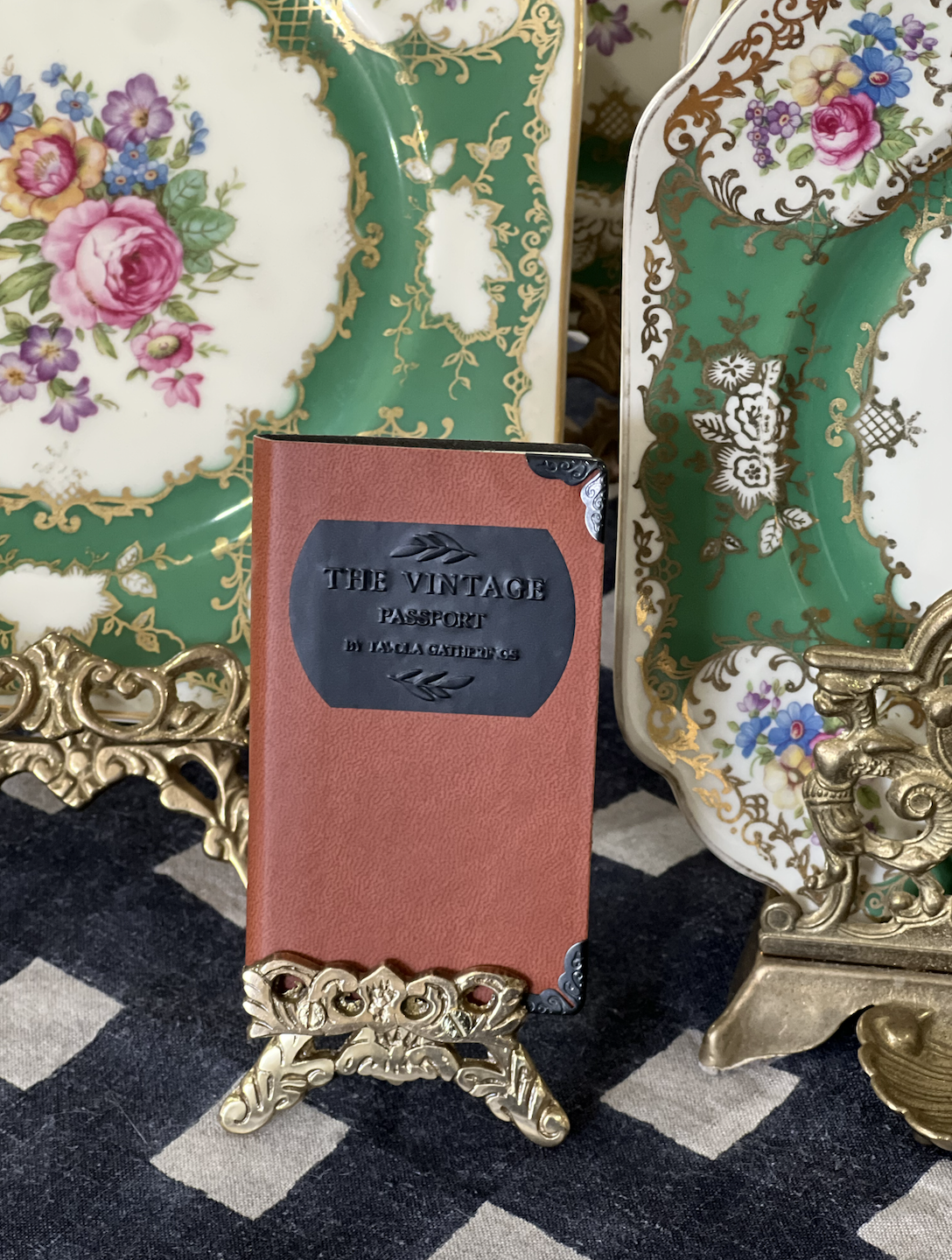
Tucked inside every set, a little something for first time Tavola customers — a hand-finished vintage passport notebook. Note the piece, the moment, the person you gave it to. One day these pieces will sit in someone else's hands — and they'll know it came from yours.
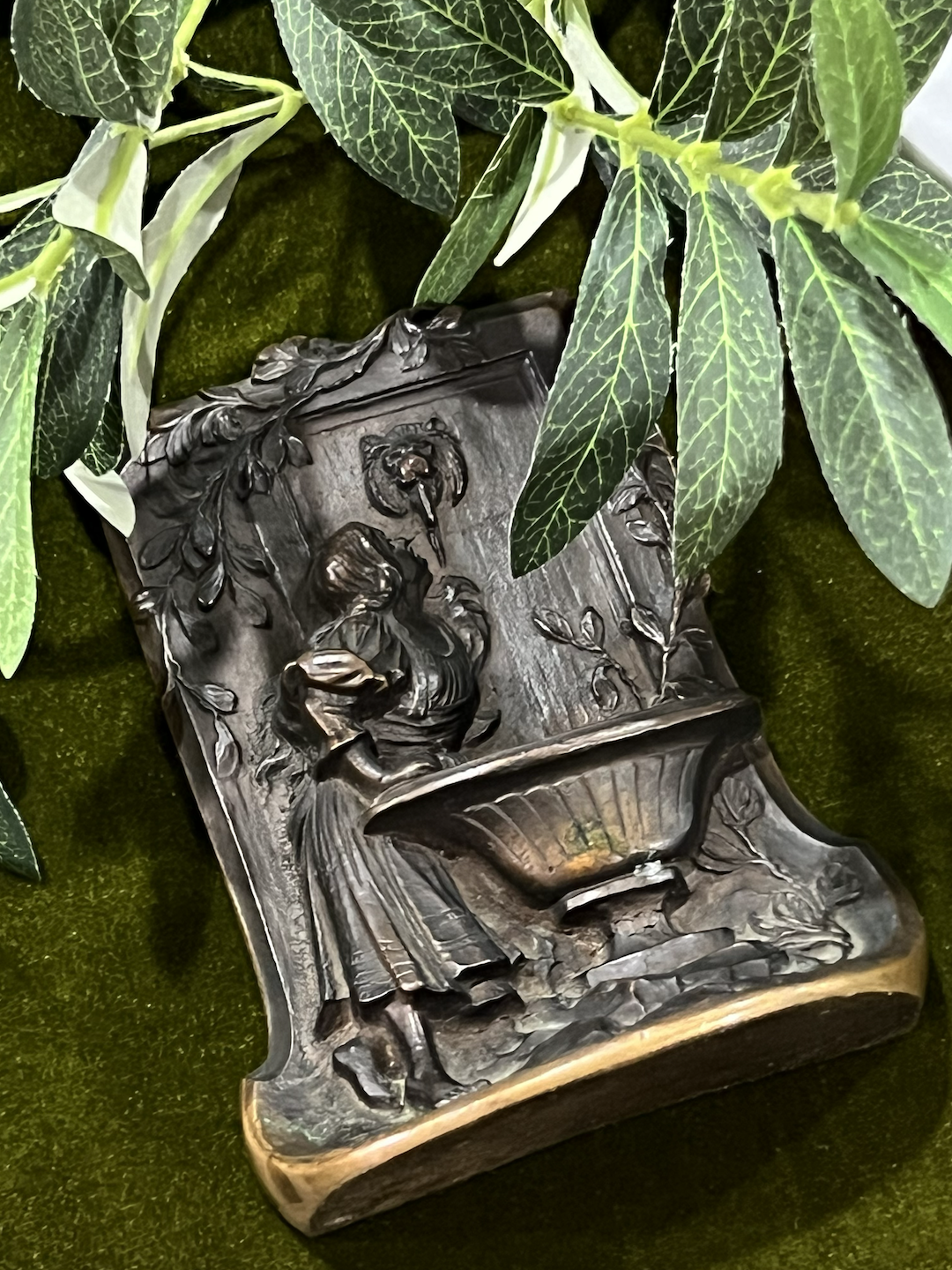 Image 1 of 3
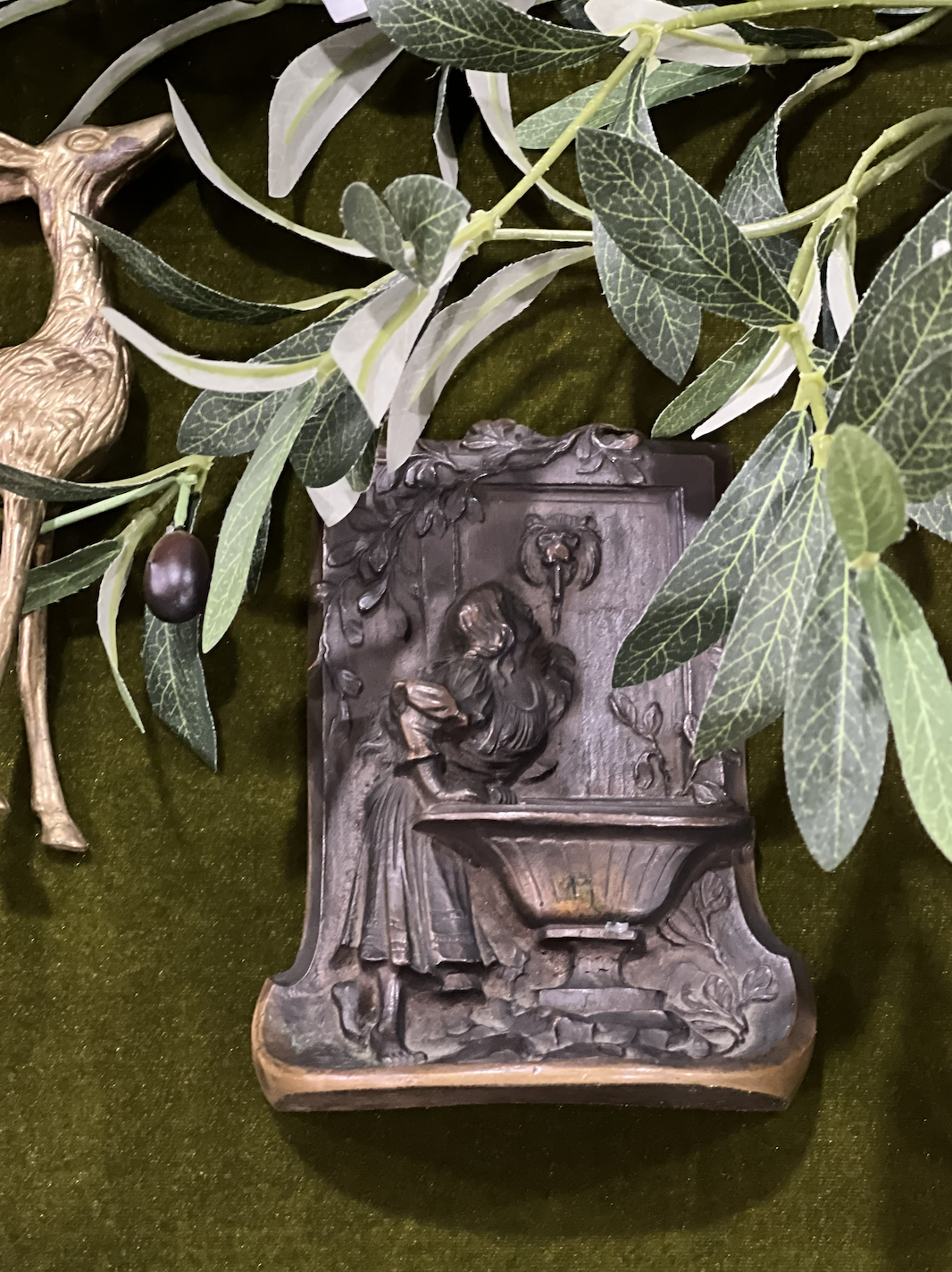 Image 2 of 3
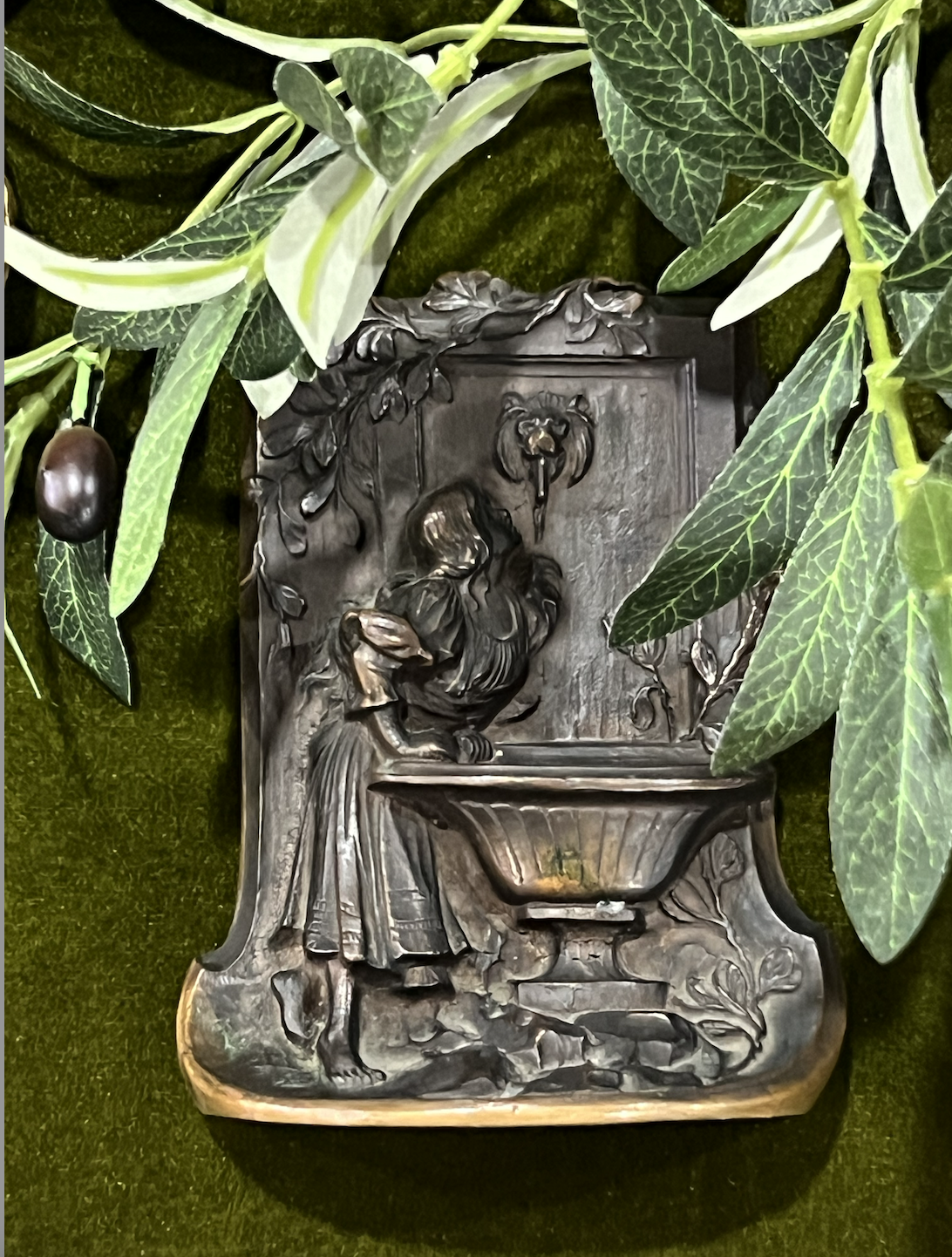 Image 3 of 3