 Image 1 of 3
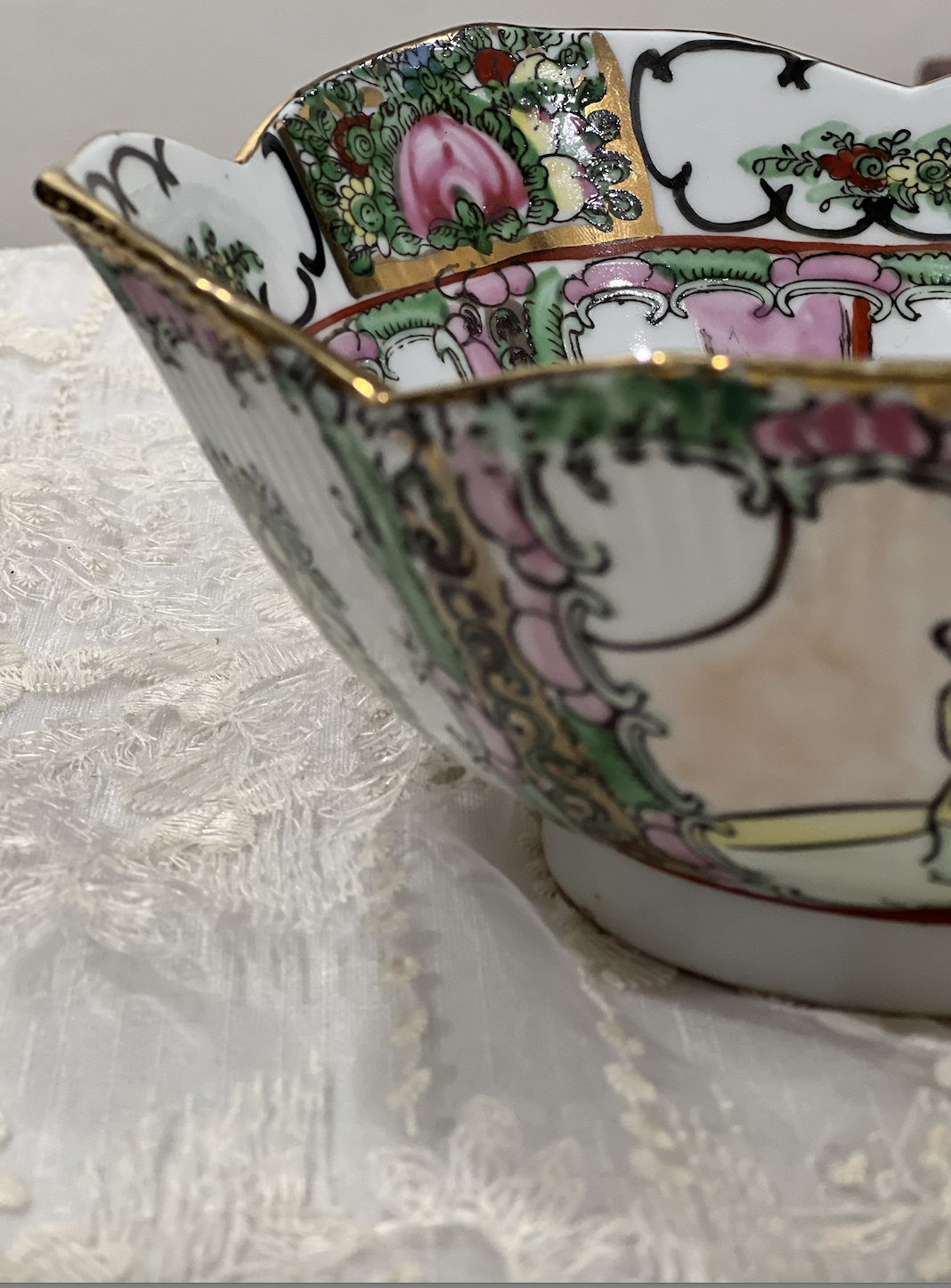 Image 2 of 3
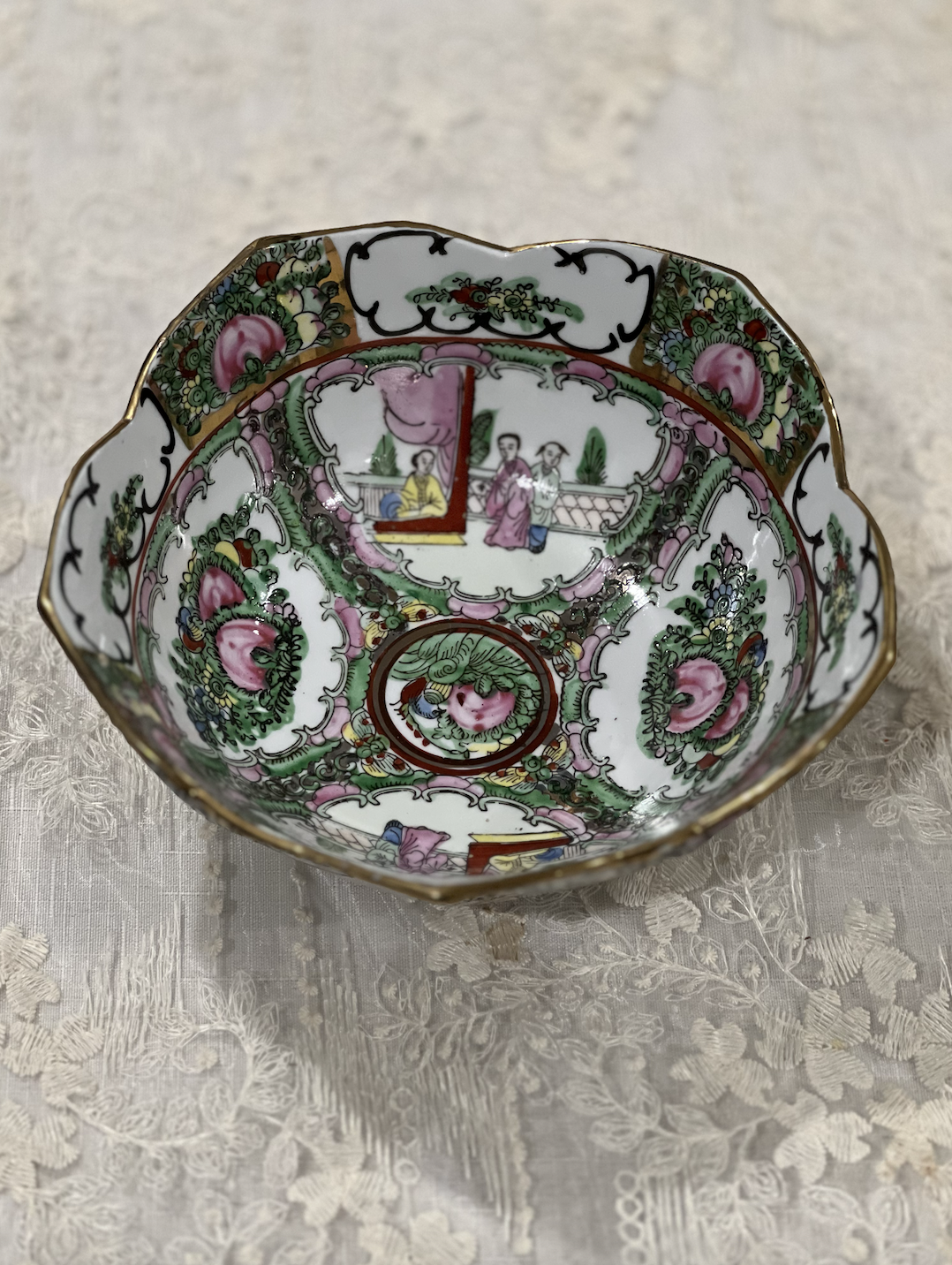 Image 3 of 3
A pattern that captivated Western collectors the moment it landed.
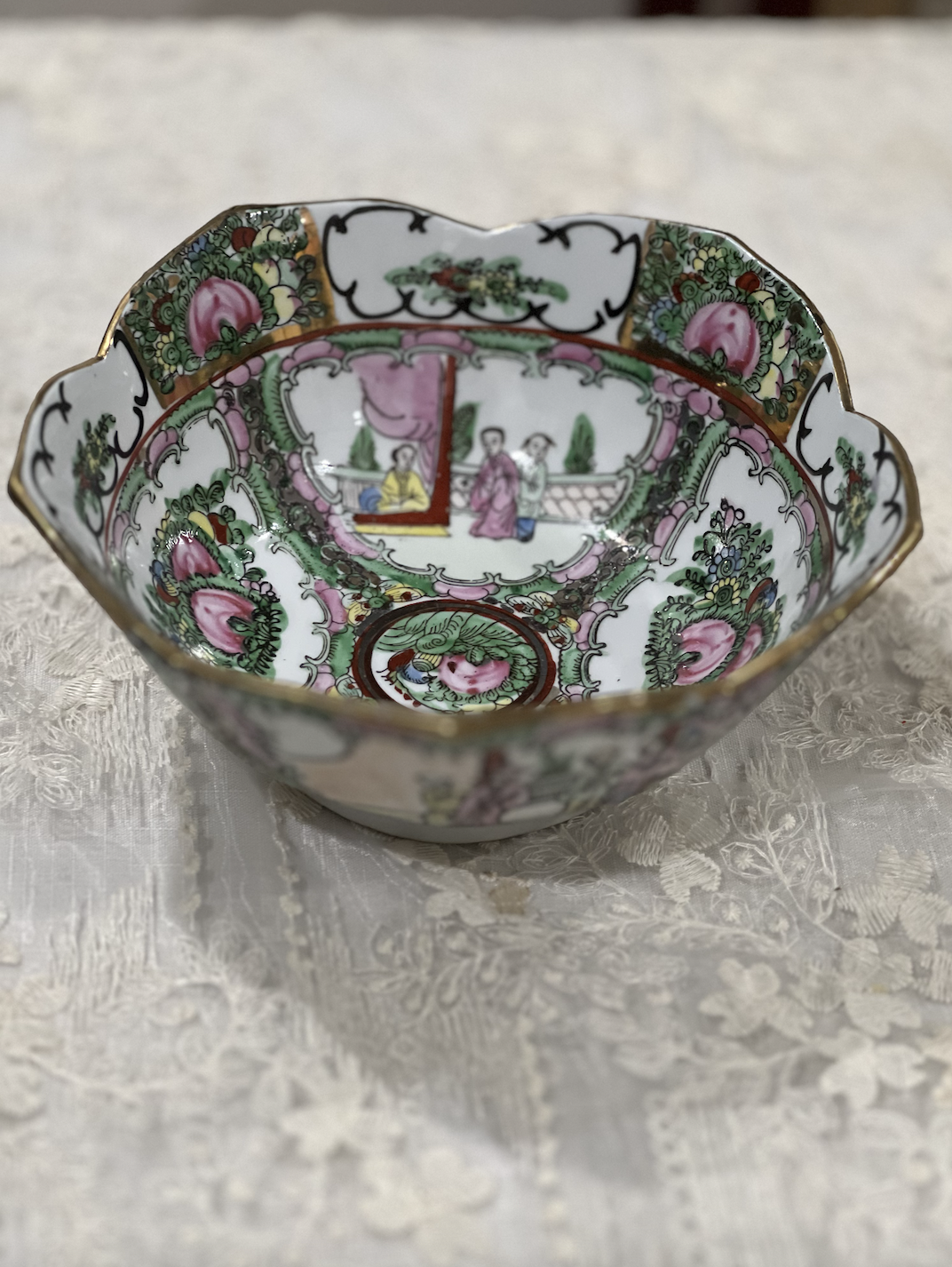
This vintage Rose Medallion bowl takes the lotus form, its scalloped, petal-shaped rim rising into soft points around a richly hand-painted interior. Alternating panels move between a Chinese figural scene, set in a garden pavilion, and dense clusters of peonies, fruit, and foliage, all bordered in gilt and anchored by a central medallion.
Rose Medallion is part of the famille rose family of Chinese export porcelain, a palette developed in the 18th century that introduced opaque white enamel into the mix, allowing painters to build shaded, dimensional color in a way earlier palettes couldn't achieve.
The pattern takes its name from the combination that defines it: panels of Chinese figures alternating with panels of flowers, birds, and fruit, a mix that made it the most sought-after of the famille rose export patterns among 19th-century Western buyers. Pieces like this were produced in Canton for the export trade, hand-painted and fired specifically to meet the tastes of European and American collectors.
8" diameter, no chips or cracks.
Tucked inside every set, a little something for first time Tavola customers — a hand-finished vintage passport notebook. Note the piece, the moment, the person you gave it to. One day these pieces will sit in someone else's hands — and they'll know it came from yours.