 Image 1 of 4
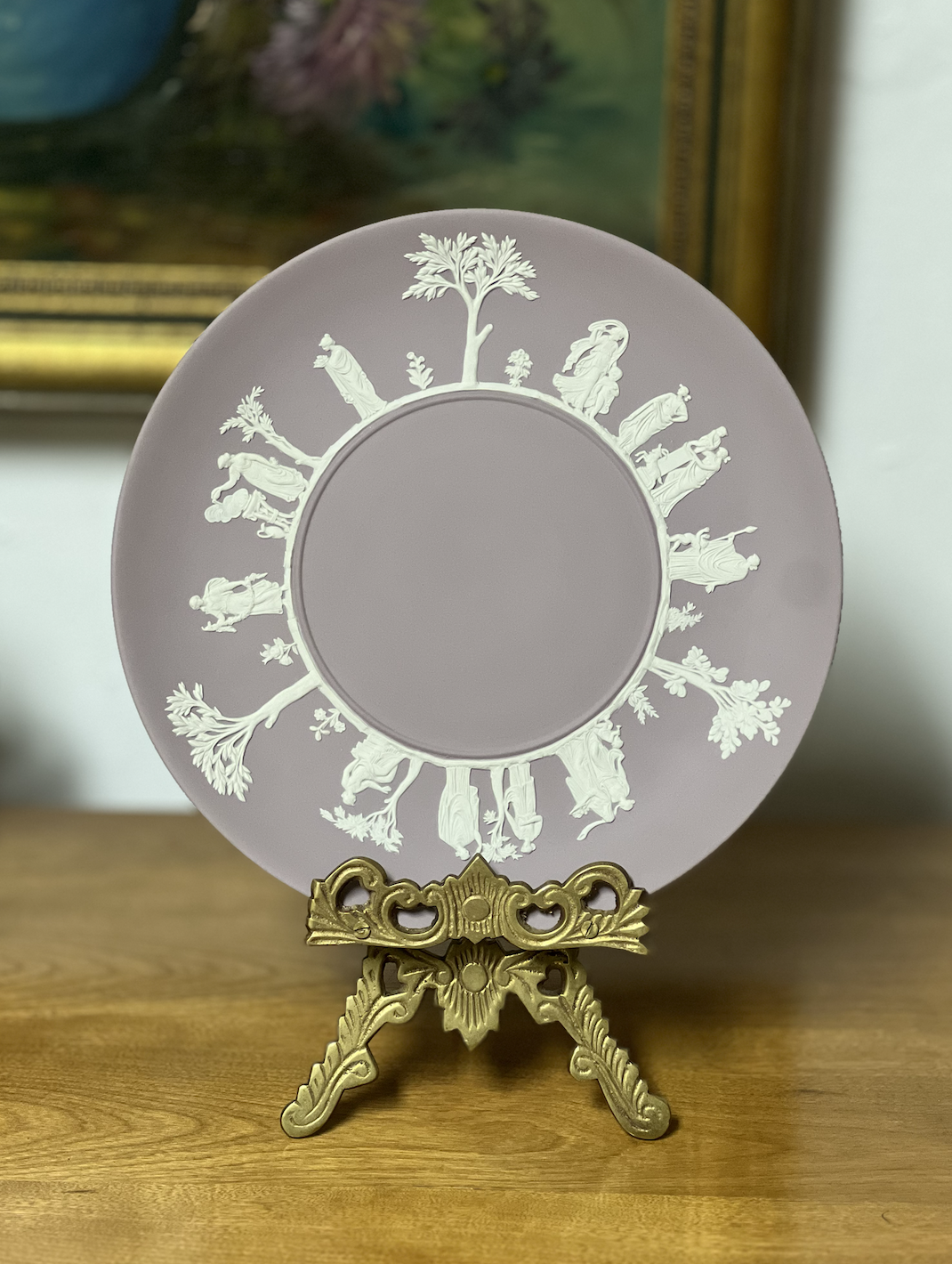 Image 2 of 4
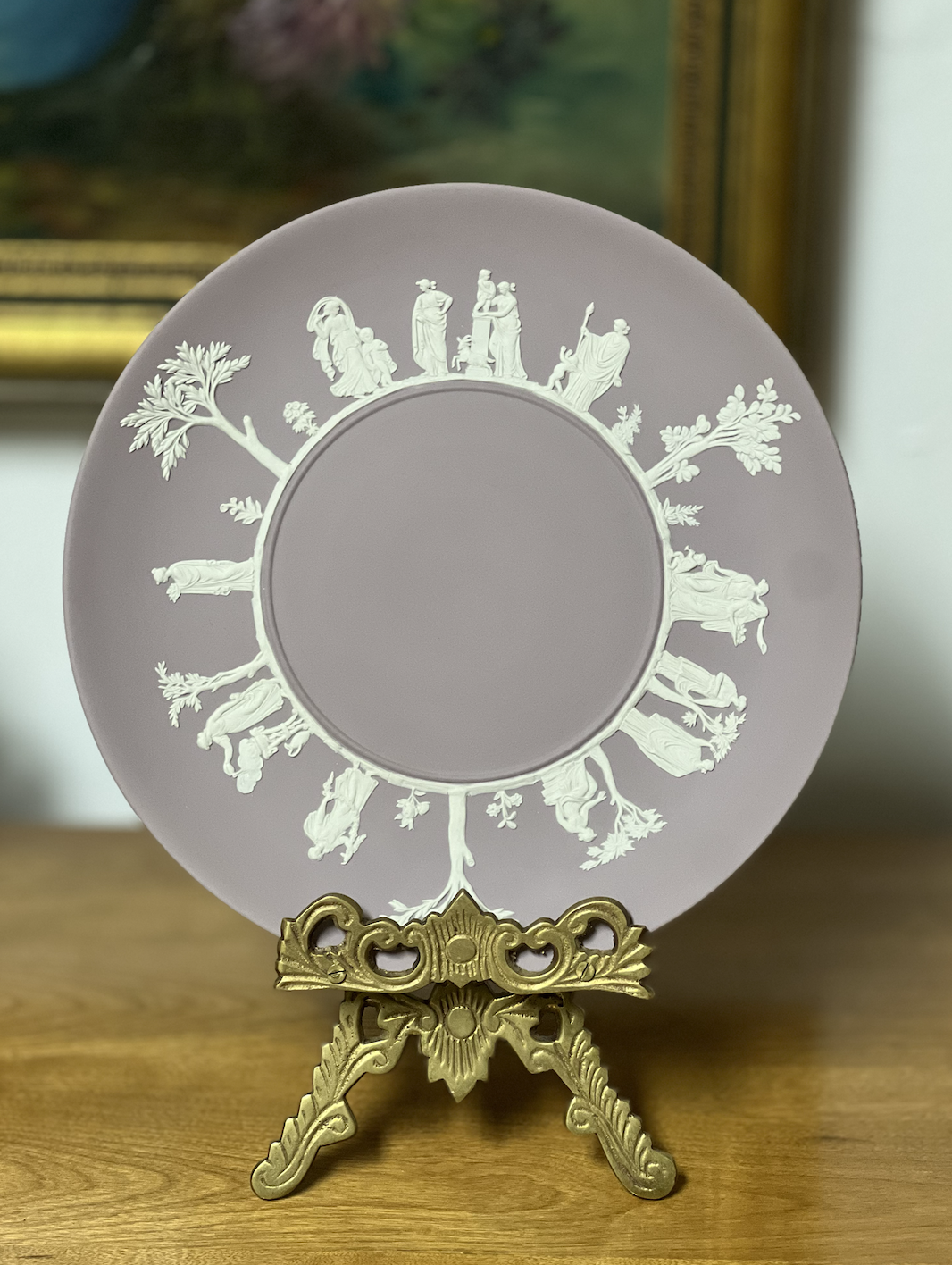 Image 3 of 4
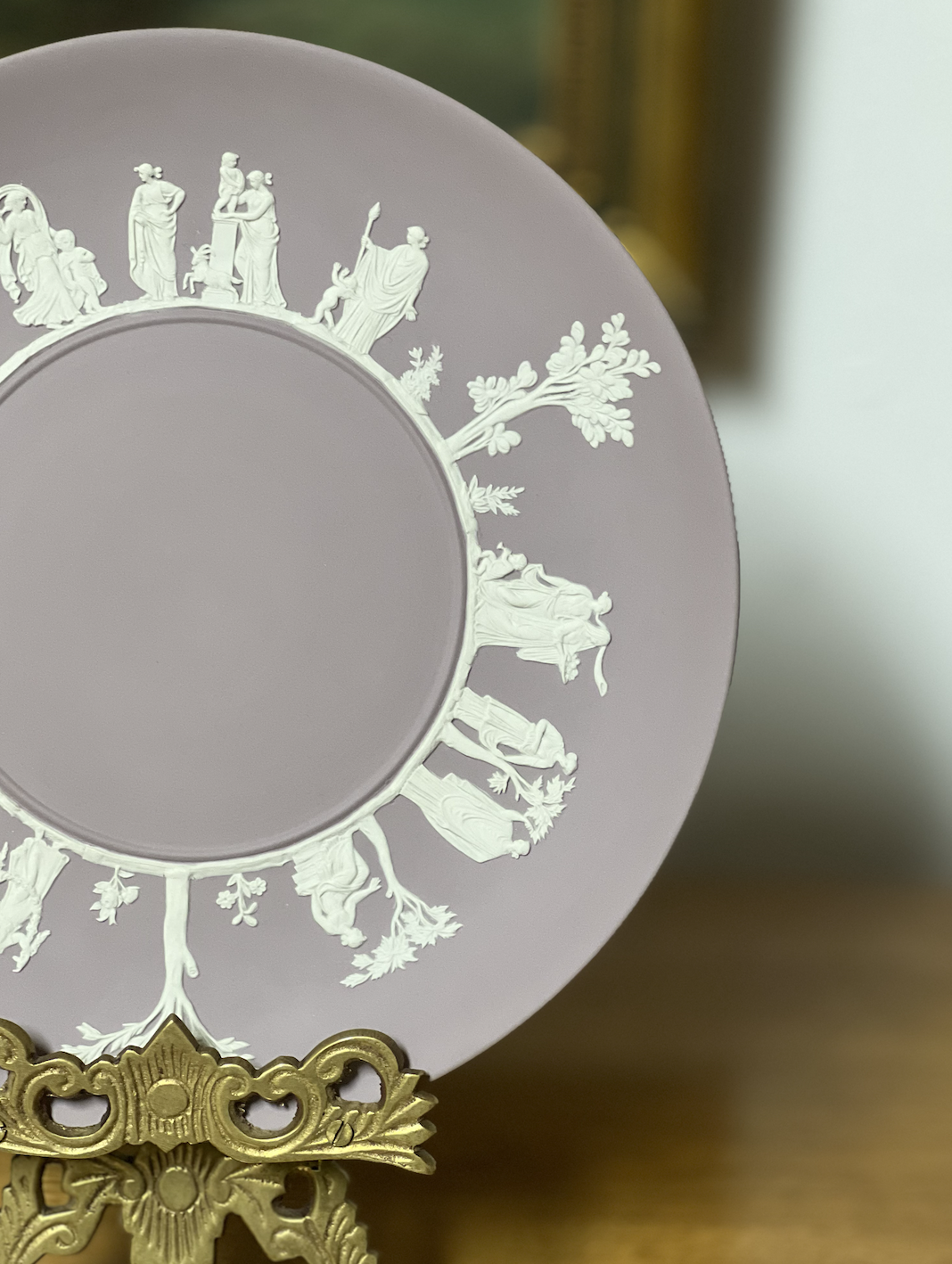 Image 4 of 4
A frieze from ancient Greece, in soft lilac.
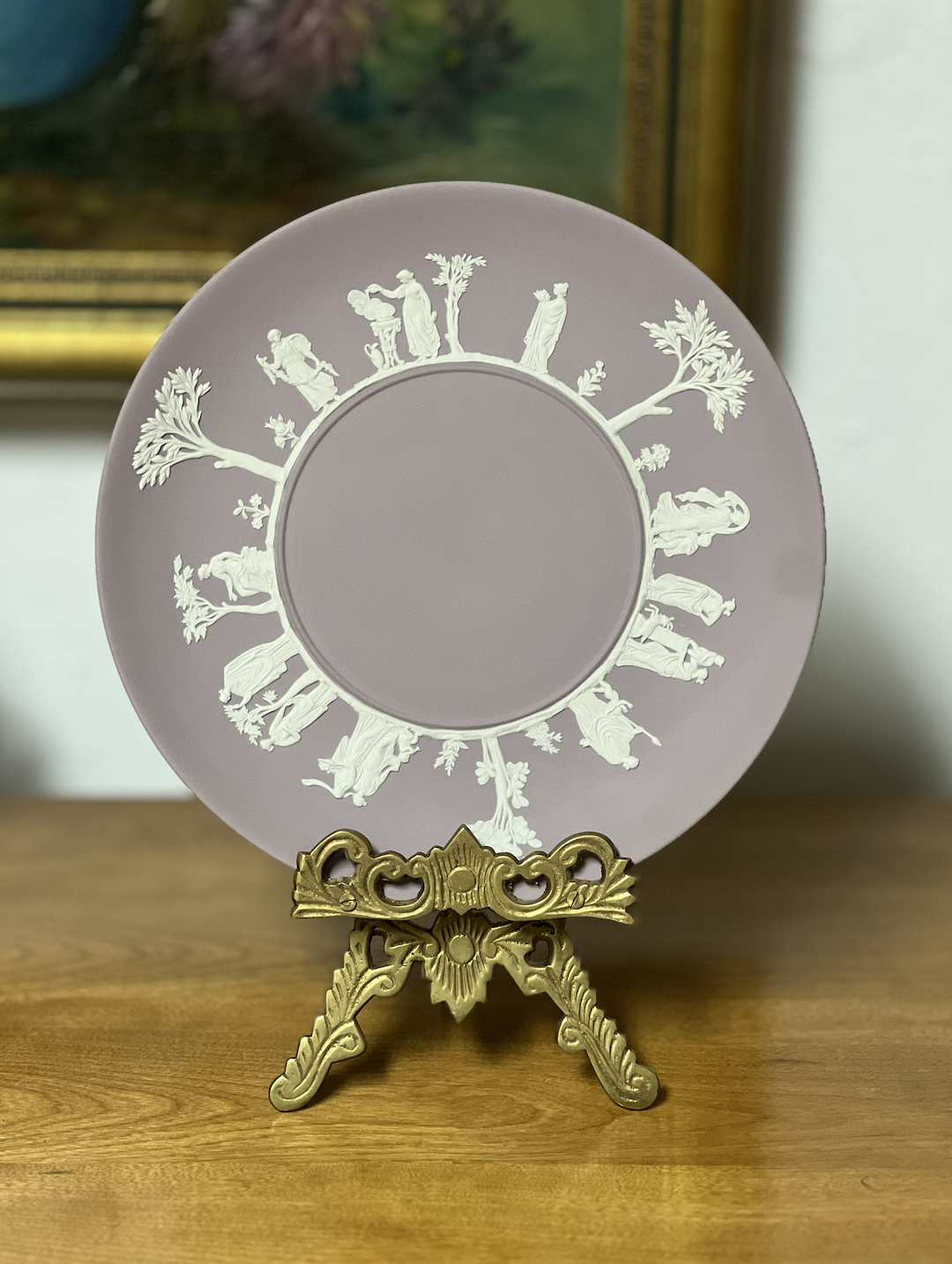
This Wedgwood cake plate is jasperware at its most graceful, with a matte lilac body and a ring of crisp white relief encircling a broad, plain center. A procession of robed classical figures moves around the well, among leafy trees and sprigs of blossom, one at a tripod altar and others gathered in flowing drapery. Every figure is sculpted in fine relief and applied by hand to the body, and the white against the lilac gives the plate the look of a cameo made large.
Jasperware was introduced by Josiah Wedgwood in 1775, after several thousand experiments. It is a fine-grained, unglazed stoneware, white in its natural state and stained with metallic oxides to produce its colors. Pale blue became the most famous shade, but lilac, sage green, black, and yellow were also made. Its neoclassical decoration was made in separate molds and applied to the surface, and the sculptor John Flaxman, who worked for Wedgwood, designed many of its finest figures. Wedgwood’s jasperware is still made today, a style that has endured for nearly 250 years.
At 9.5", the broad, open center makes this plate a natural cake stand for a cake, tart, or a tower of macarons, and a lovely tablescape piece for a spring or tea party. It also stands beautifully on a plate stand, as the star of a mantel, a shelf, or a gallery wall. It comes with its box, numbered J700 2543.
Details
Wedgwood jasperware cake plate, white relief on lilac, neoclassical figures and trees, matte unglazed stoneware, 9.5" diameter, includes box numbered J700 2543
Tucked inside every set, a little something for first time Tavola customers — a hand-finished vintage passport notebook. Note the piece, the moment, the person you gave it to. One day these pieces will sit in someone else's hands — and they'll know it came from yours.