Delicate garlands of roses and leaves, tied up with little bows, loop all the way around this Royal Crown Derby platter. A single black rosebud cluster sits in the center. The palette is just black, white and a thin line of gold, so it looks crisp on its own. It also lets a roast turkey, a glazed ham or a bright seasonal salad take center stage. The pattern is Silhouette, in fine English bone china.
The swag-and-ribbon motif goes back to the neoclassical taste of the late 1700s. Designers of that era borrowed garlands from ancient Roman decoration and tied them with ribbons, and the style has been popular on English tableware ever since.
The Derby porcelain factory dates to around 1750. It earned the “Crown Derby” name in 1773, when King George III allowed the crown mark to be used. Queen Victoria granted the “Royal” title in 1890. The works still stands on Osmaston Road in Derby, England.
At 15.5" x 12.25", it has room for a whole holiday main course. Set it on the buffet or on a cake stand, or hang it on the wall between meals. It’s in excellent condition, with no chips or cracks.
Tucked inside every set, a little something for first time Tavola customers — a hand-finished vintage passport notebook. Note the piece, the moment, the person you gave it to. One day these pieces will sit in someone else's hands — and they'll know it came from yours.
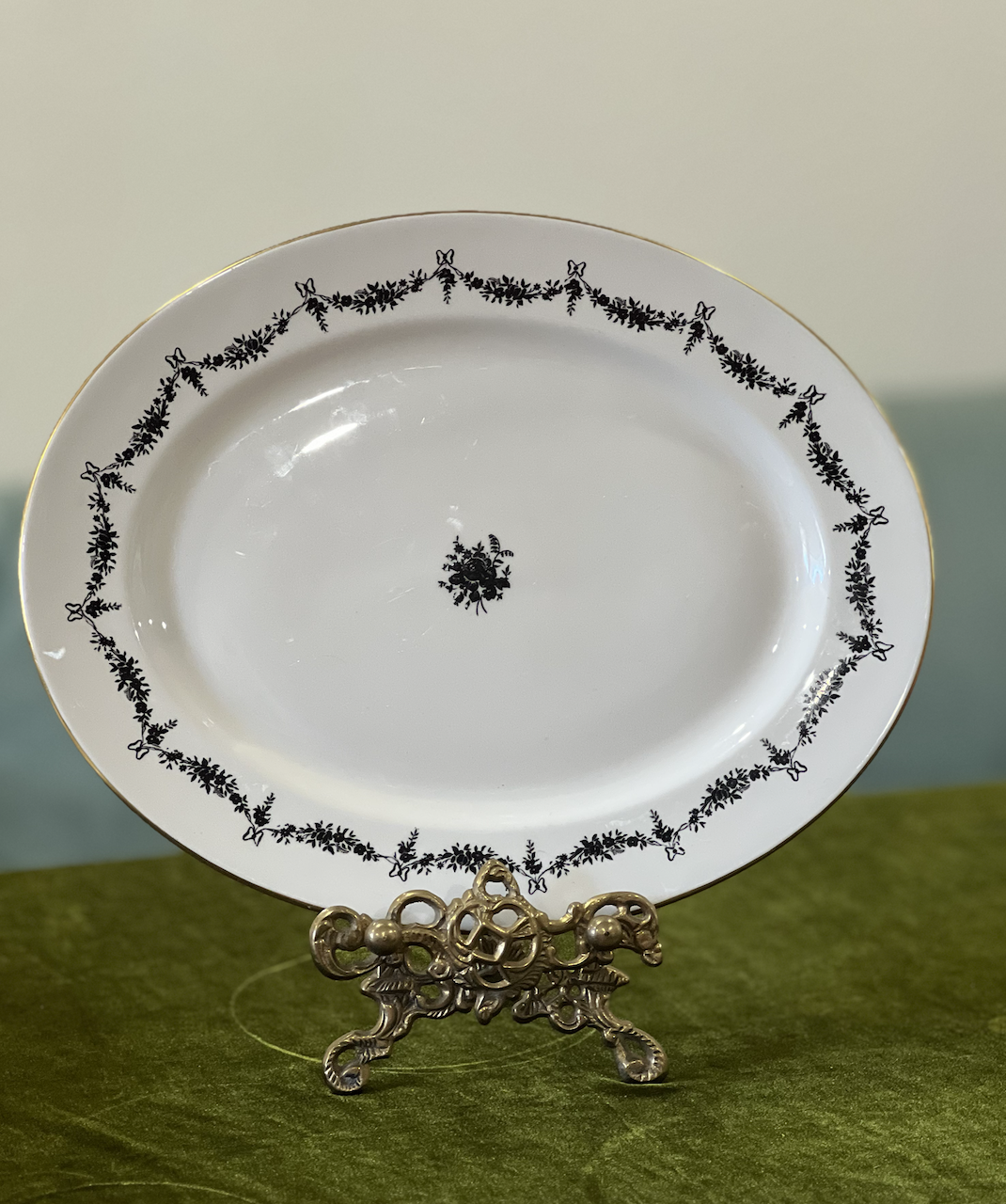 Image 1 of 3
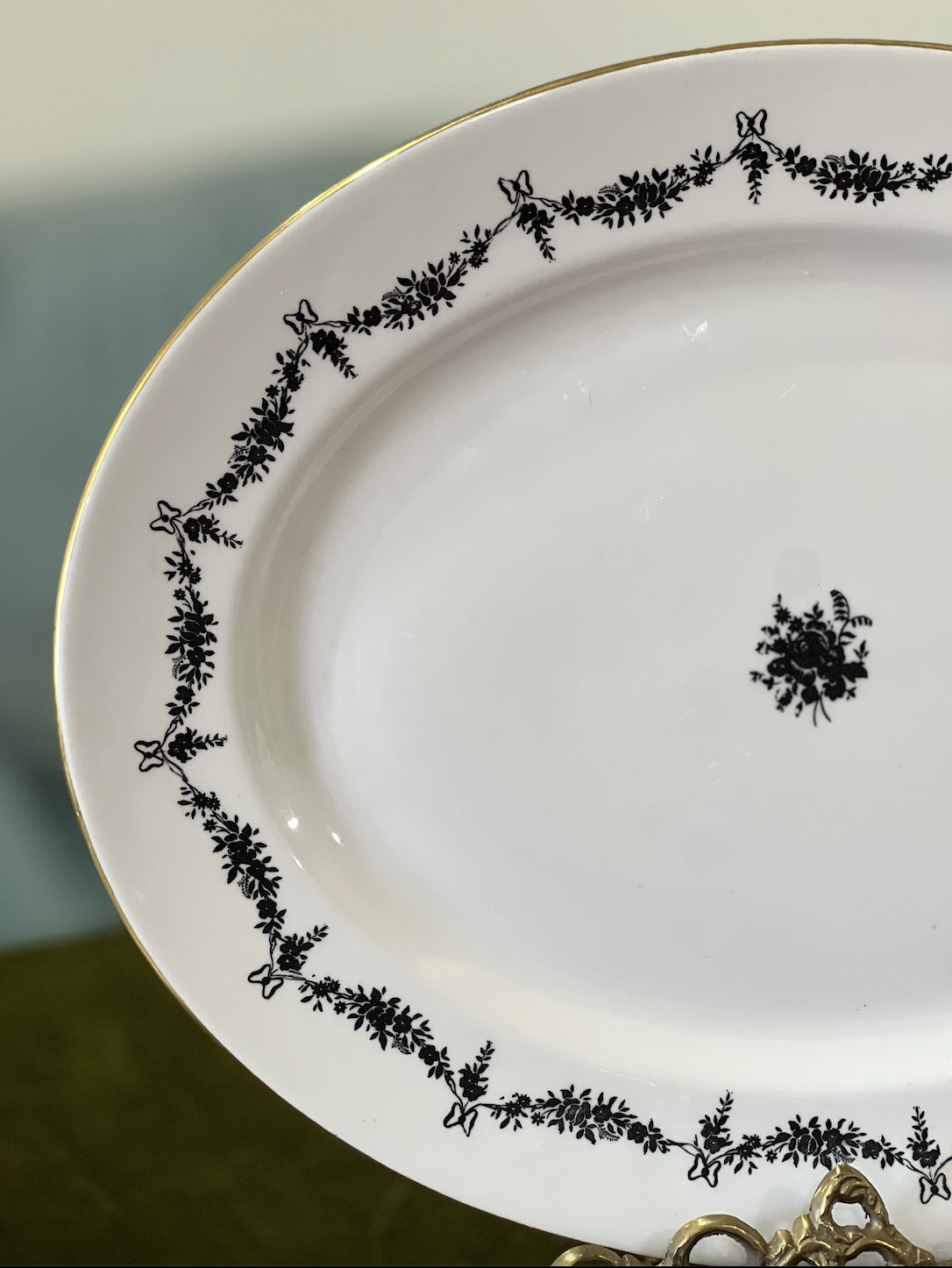 Image 2 of 3
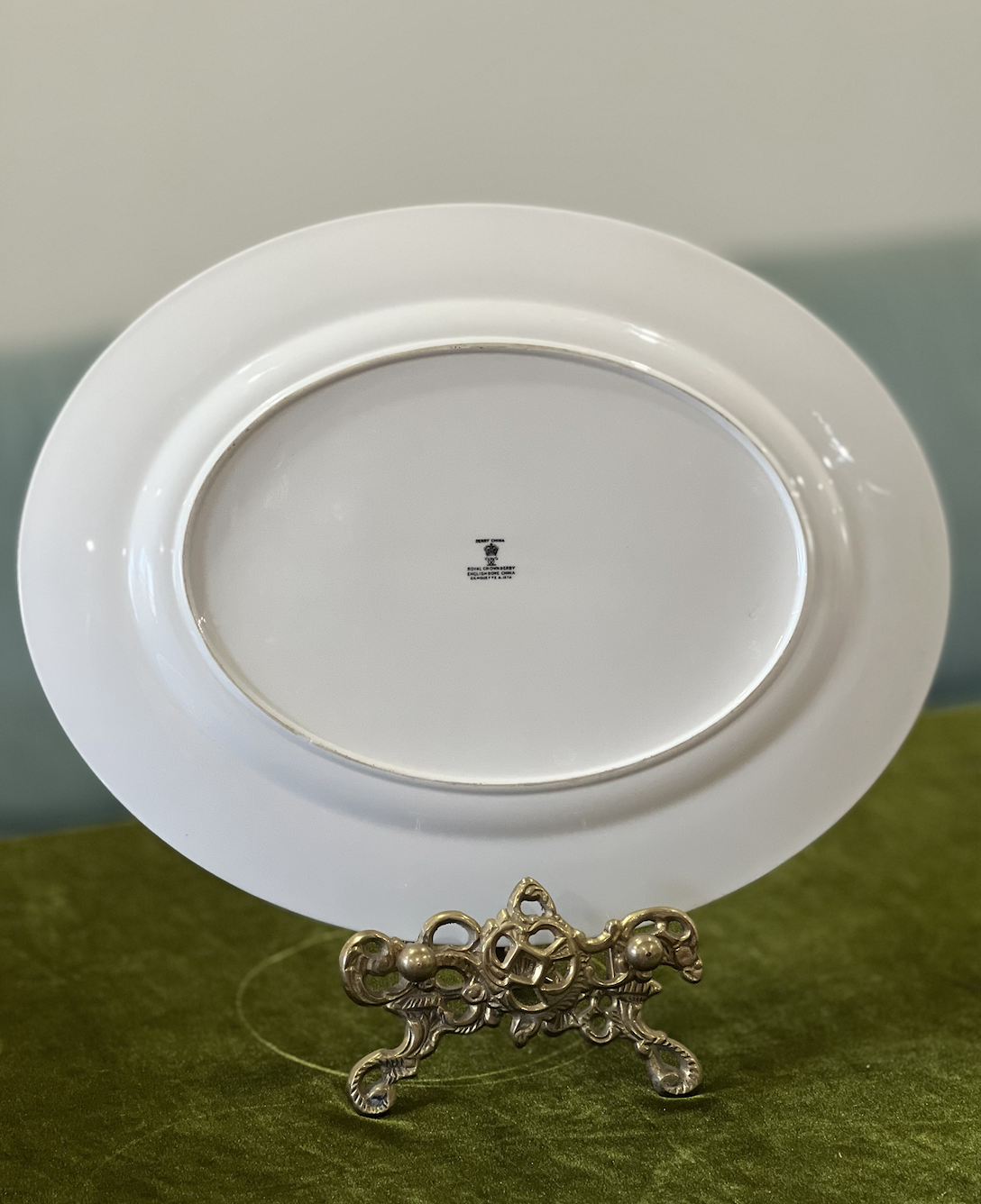 Image 3 of 3